Cassoulet Recipe: Authentic French Bean Stew from Languedoc | The French Fork
The French Fork
Archives
Cassoulet Recipe: Authentic French Bean Stew from Languedoc | The French Fork
SIGN UP FOR OUR NEWSLETTER
Cassoulet: The Hearty Soul of Southwestern France |
A centuries-old bean and meat stew that warms from the inside out |

The French Fork
Mar 13, 2026
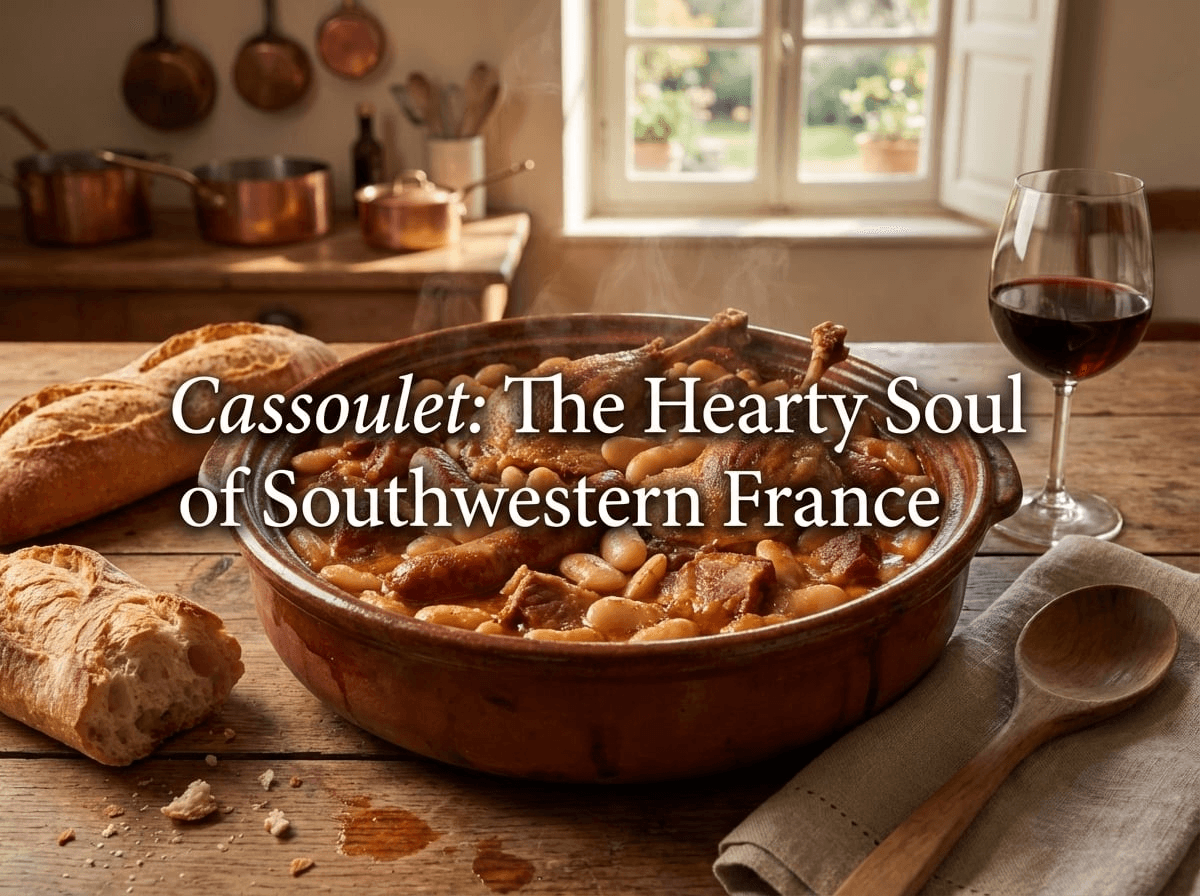 |
Some dishes carry the weight of history in every bite. Cassoulet is one of them. This legendary white bean stew from the Languedoc region has been nourishing families for over 700 years, evolving from a humble peasant meal to one of France's most celebrated culinary treasures.
The Origins of a Legend
The story of cassoulet begins in the town of Castelnaudary, nestled between Toulouse and Carcassonne. According to local lore, the dish was born during the Hundred Years' War when the besieged town pooled their remaining provisions—white beans, pork, sausage, and preserved duck—to create a hearty meal for soldiers defending the walls.
Whether this tale is fact or folklore matters little. What endures is the tradition: cassoulet represents the French art of transforming simple ingredients into something extraordinary through time, patience, and technique.
The Three Rival Cities
Cassoulet isn't just one recipe—it's three. Each city claims the authentic version:
Castelnaudary, the self-proclaimed birthplace, uses pork shoulder, pork knuckle, and Toulouse sausage. No duck or goose confit here—purists insist the original never included fowl.
Toulouse adds duck or goose confit to the mix, along with their famous garlicky sausage. This version is richer, more complex, and perhaps the best-known internationally.
Carcassonne takes liberties with lamb shoulder and sometimes partridge, reflecting the region's proximity to the mountains and hunting traditions.
Each version is authentic. Each has its defenders. The only wrong choice is a rushed one.
The Secret Lies in the Crust
What separates great cassoulet from good cassoulet is the crust. Traditionally cooked in a cassole—a deep, earthenware pot with slanted sides—the dish develops a golden, crackling surface during its long, slow bake.
Seven times during cooking, the cook breaks this crust, stirring it back into the beans. This creates the creamy, velvety texture that defines the dish. The beans should be tender but intact, bathed in a rich, meaty broth that coats the spoon without being soupy.
Ingredients (Serves 6-8)
For the beans: 500g dried haricot beans (lingot or coco de Pamiers) 1 large onion, studded with 2 cloves 1 bouquet garni (thyme, parsley, bay leaf) 4 garlic cloves 1 pork skin or rind (optional, for richness)
For the meats: 400g pork shoulder, cubed 400g Toulouse sausage (or garlicky pork sausage) 4 duck or goose confit legs 200g pork belly or pancetta, cubed
Seasoning: Salt and freshly ground black pepper 2 tablespoons duck fat or olive oil 1 tablespoon tomato paste
Preparation
Soak the beans overnight in cold water. The next day, drain and place in a large pot with the onion, bouquet garni, garlic, and pork skin. Cover with water and simmer gently until the beans are nearly tender—about 45 minutes. Season with salt only at the end.
Meanwhile, brown the pork shoulder and belly in duck fat. Set aside. Brown the sausages. Render the confit duck legs in their own fat until the skin crisps.
In a large cassole or deep ovenproof dish, layer the beans and meats. Start with a layer of beans, add the pork, then more beans, nestle in the sausages and duck legs. Pour the bean cooking liquid over everything—there should be just enough to barely cover.
Bake at 150°C (300°F) for about 3 hours. Every 30 minutes, break the forming crust and gently stir. If it looks dry, add a ladle of warm stock. The cassoulet is done when a spoon dragged through leaves a trail that slowly fills in.
Serving and Pairing
Serve cassoulet directly from the pot, making sure each guest gets a mix of beans and meats. A simple green salad with sharp vinaigrette cuts through the richness. For wine, reach for a robust red from the region—Minervois, Corbières, or a earthy Cahors.
This is not a dish for rushed weeknights. Cassoulet demands a lazy Sunday, good company, and perhaps a post-lunch nap. Some traditions exist for a reason. |