Coq au Vin: The Rustic French Classic That Conquered the World | The French Fork
The French Fork
Archives
Coq au Vin: The Rustic French Classic That Conquered the World | The French Fork
SIGN UP FOR OUR NEWSLETTER
Coq au Vin: The Rustic French Classic That Conquered the World |
Discover the authentic Burgundy recipe that turned humble ingredients into haute cuisine |
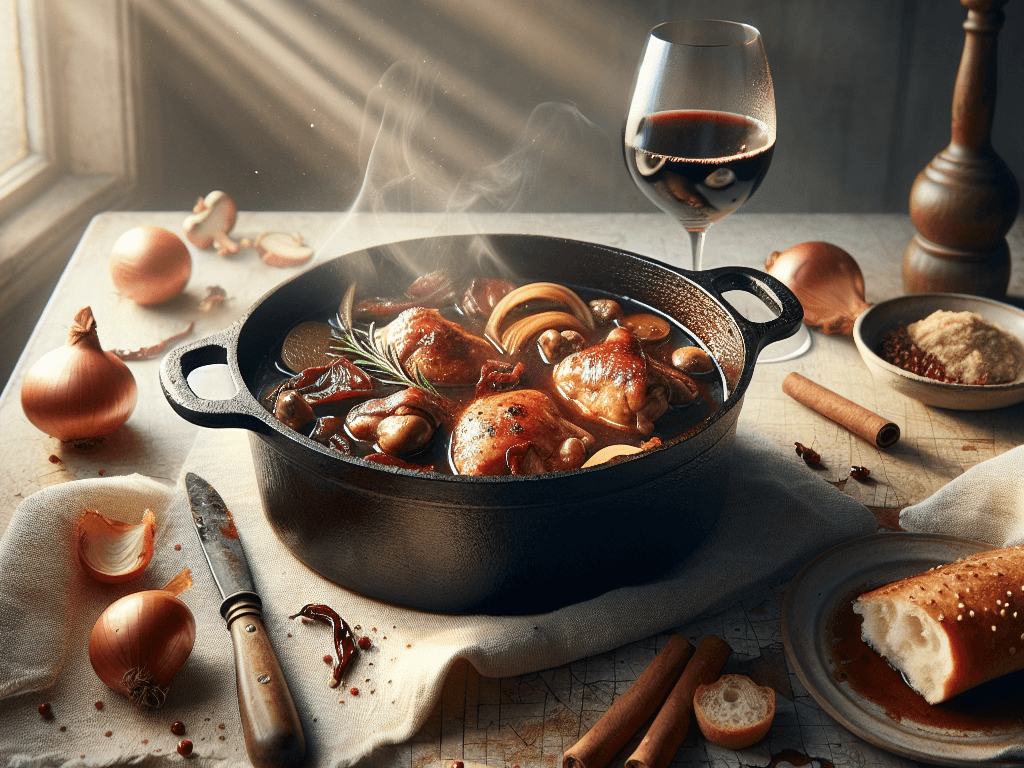 |
There is something almost magical about the way a simple chicken transforms when it meets a bottle of good Burgundy wine.
Coq au vin is not just a recipe. It is a story of French terroir, peasant ingenuity, and the kind of patience that turns tough old birds into fork-tender perfection.
A Dish Born from Necessity
Long before it became a staple of French restaurants around the world, coq au vin was survival food.
In the rolling hills of Burgundy, where vineyards stretch as far as the eye can see, farm families faced a practical problem. Roosters past their prime were too tough for roasting. The meat was stringy, chewy, nearly inedible by conventional methods.
The solution was as brilliant as it was simple. Slow-cook that tough old bird in the region's abundant red wine. Add some bacon fat for richness. Throw in mushrooms and onions from the garden. Let time and alcohol work their magic.
The result was a dish so good that it eventually caught the attention of Auguste Escoffier, the legendary French chef who codified modern French cooking. He included coq au vin in his seminal cookbooks, elevating peasant food to haute cuisine.
Julia Child and the American Love Affair
If the French created coq au vin, Julia Child introduced it to America.
When her groundbreaking cookbook Mastering the Art of French Cooking hit American shelves in 1961, coq au vin was right there in the poultry chapter. Her television show brought the dish into living rooms across the United States.
Suddenly, home cooks who had never left their own states were braising chicken in wine and feeling like they had been transported to a farmhouse in Burgundy.
The appeal was immediate and enduring. Here was a dish that felt fancy but was fundamentally forgiving. It could simmer away while you did other things. It tasted better the next day. It made you look like a far better cook than you actually were.
The Authentic Recipe
This is the real deal. Not a quick weeknight version. Not a shortcut adaptation. The traditional coq au vin as it has been made in Burgundy for generations.
Serves: 6 people
Ingredients:
1 whole chicken, cut into pieces (about 1.5 kg / 3.3 lbs)
For the onion and mushroom garnish:
2 tablespoons / 30 grams butter
The Method
Start by cooking the bacon lardons in a large Dutch oven over medium heat until they are crispy and have rendered their fat. Remove the bacon with a slotted spoon and set aside, but leave that precious bacon fat in the pot.
Pat the chicken pieces completely dry with paper towels. Season generously with salt and pepper. Working in batches so you do not crowd the pan, brown the chicken on all sides in the hot bacon fat. This step is crucial. You want deep golden color, not just a pale sear. Remove the chicken and set aside.
Pour off all but about two tablespoons of the fat from the pot. Add the minced garlic and cook for about thirty seconds until fragrant. Pour in the bottle of wine and scrape up all those browned bits from the bottom of the pot. Those bits are pure flavor.
Add the chicken stock and tomato paste. Stir until the tomato paste dissolves completely. Return the chicken and bacon to the pot. Toss in the thyme and bay leaves. Bring to a gentle simmer, then cover and cook on low heat for about ninety minutes.
While the chicken simmers, prepare the garnish. Melt two tablespoons of butter in a skillet over medium heat. Add the pearl onions and sugar. Cook, shaking the pan occasionally, until the onions are golden and caramelized. This takes about ten minutes. Remove and set aside.
In the same skillet, melt another tablespoon of butter and sauté the quartered mushrooms until they are golden brown and have released their moisture. Set these aside as well.
When the chicken is nearly tender, remove it from the pot and keep warm. Strain the cooking liquid through a fine-mesh sieve into a clean pot, pressing on the solids to extract all the liquid.
Now make the beurre manié. Mash together three tablespoons of softened butter with two tablespoons of flour until you have a smooth paste. Whisk this into the simmering cooking liquid a bit at a time until the sauce thickens to a silky consistency that coats the back of a spoon.
Return the chicken to the sauce along with the caramelized onions and mushrooms. Simmer gently for another ten minutes to let the flavors marry.
Serving and Pairing
Traditional coq au vin is served directly from the cooking vessel, family style. Ladle the chicken, sauce, onions, and mushrooms into shallow bowls.
Garnish with plenty of fresh chopped parsley. The bright green against the deep burgundy sauce is visually stunning.
Serve with crusty French bread for soaking up every last drop of that wine-rich sauce. Buttered egg noodles or mashed potatoes work beautifully too.
As for wine, stay true to the dish's roots. Pour the same Burgundy you cooked with. A Pinot Noir from the Côte de Nuits is traditional, but any dry red wine you enjoy drinking will work in the pot.
A Dish That Rewards Patience
Coq au vin is not fast food. It is slow food in the truest sense. It demands time, attention, and quality ingredients.
But what you get in return is a dish that connects you to centuries of French culinary tradition. Every bite carries the essence of Burgundy. The wine, the earth, the patient hands of generations of cooks who understood that the best things cannot be rushed.
Make this dish on a lazy Sunday afternoon. Let it fill your kitchen with aromas that make everyone ask what is for dinner. Serve it to people you love.
That is what coq au vin is really about. |