The French Fork
Archives
"From Nîmes with Love: The Seductive Story of Brandade de Morue"
SIGN UP FOR OUR NEWSLETTER
|
|

The French Fork
Jan 13, 2026
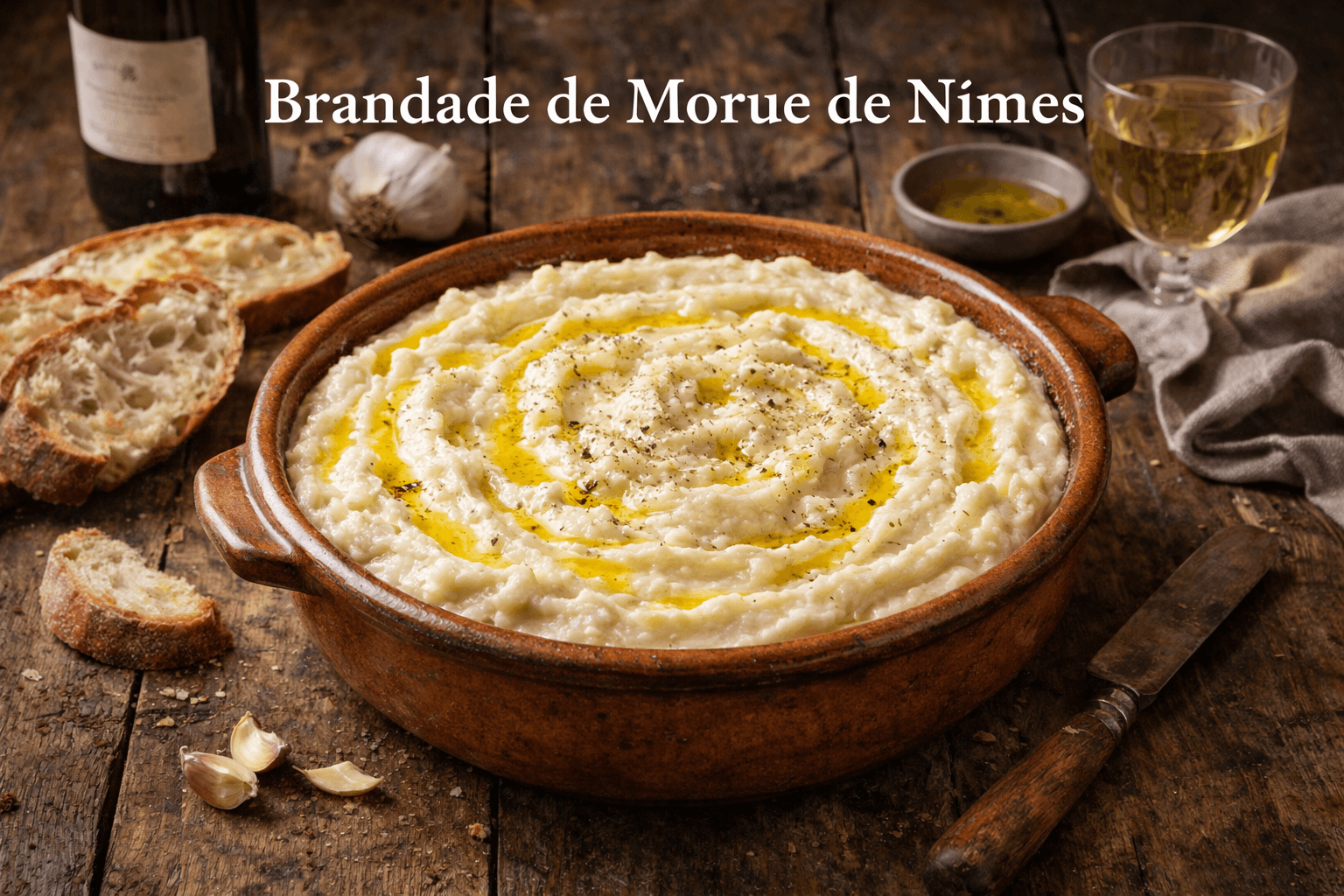 |
Some dishes shout. Others whisper. Brandade belongs to the second kind. It never announces itself loudly, yet once it reaches the table, everything slows. Bread is torn instead of sliced. Conversation pauses. Someone always asks, almost surprised, how something so simple can taste so complete.
In the kitchens around Nîmes, brandade has long been a lesson in restraint. Salt cod, olive oil, milk, garlic. No herbs, no tricks, no shortcuts. The magic lives in the gesture, in the slow incorporation of oil, in the steady hand that turns flakes of fish into something smooth and luminous. It is not mashed. It is worked. Coaxed. Persuaded.
Brandade sits at the crossroads of land and sea. The cod came inland packed in salt, the oil flowed north from the Mediterranean, and together they fed generations far from the coast. This is food born of preservation and ingenuity, yet it tastes anything but austere.
A dish of rhythm, not force
Brandade teaches patience. Too much oil too quickly and it splits. Too much heat and it tightens. Too much garlic and it shouts. When done well, it is airy yet rich, salty yet rounded, spreading across warm bread like softened butter.
Served warm, it comforts. Served cool, it refreshes. In summer it appears beside salads and tomatoes. In winter it finds its place near the fire, with a glass of white wine and nothing else demanding attention.
Brandade de Morue – The Recipe
Serves 4 as a main, 6 as a starter
Ingredients
Salt cod (boneless if possible), 600 g | 1.3 lb Whole milk, about 500 ml | 2 cups Olive oil, 250–300 ml | 1–1¼ cups Garlic cloves, 2 Bay leaf, 1 White pepper, to taste Optional: 1 small potato, cooked and mashed (Nîmes purists may disagree, but many homes include it)
Preparation
Begin the day before. Rinse the salt cod briefly under cold water, then place it in a large bowl of fresh cold water. Let it soak for 24 hours, changing the water three to four times. Taste a small piece at the end. It should be pleasantly seasoned, not aggressively salty.
The next day, place the cod in a wide pan and cover with milk. Add the bay leaf and garlic cloves. Bring just to a gentle simmer, never a boil. After about 8–10 minutes, the fish should flake easily. Remove from the heat, lift out the cod, and reserve the milk.
Discard the bay leaf and garlic. Carefully remove any remaining skin or bones. Flake the cod finely with your fingers while still warm.
Place the cod in a heavy bowl or saucepan set over very low heat. Begin working it with a wooden spoon. Add the olive oil slowly, in a thin stream, stirring constantly, as if making a warm mayonnaise. The mixture will thicken, then loosen, then turn pale and creamy.
If it becomes too dense, add a spoonful of the warm milk to relax it. Continue alternating oil and milk until the texture is light, smooth, and supple. If using the potato, fold it in gently near the end.
Season with white pepper. Taste before adding salt. Often, none is needed.
Serve warm, not hot, with grilled country bread rubbed lightly with garlic.
What to drink with brandade
Brandade loves freshness and quiet minerality. A Picpoul de Pinet brings citrus and lift that cut through the richness. A Costières de Nîmes white, especially one with some Roussanne or Grenache Blanc, echoes the olive oil and rounds the dish beautifully. If the evening stretches on, a chilled dry vermouth is not out of place.
A dish that rewards attention
Brandade asks you to stay close. It does not tolerate distraction. But in return, it gives something rare: a dish that feels both ancient and immediate, humble and quietly luxurious.
And if you ever wander the streets of Nîmes as evening falls, follow the scent of warm olive oil and toasted bread. Somewhere behind a half-open window, someone is stirring slowly, and brandade is becoming itself. |