Ratatouille: The Colorful Heart of Provençal Cuisine | The French Fork
The French Fork
Archives
Ratatouille: The Colorful Heart of Provençal Cuisine | The French Fork
SIGN UP FOR OUR NEWSLETTER
Ratatouille: The Colorful Heart of Provençal Cuisine |
Discover the authentic vegetable stew that captured the world's imagination |

The French Fork
Mar 11, 2026
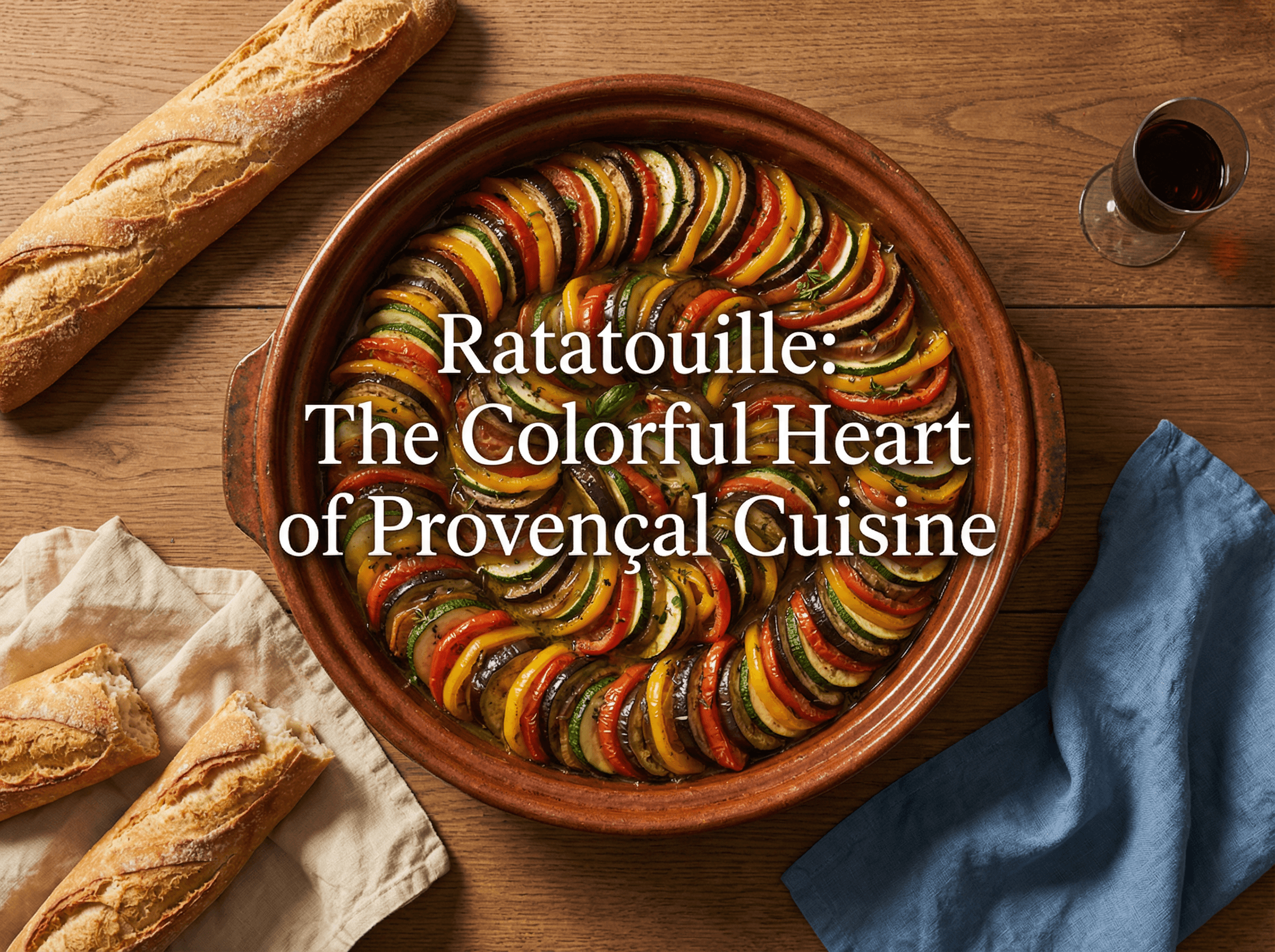 |
There is a moment in late summer when the markets of Provence explode with color.
Deep purple eggplants. Bright green zucchini. Sun-ripened tomatoes in shades of red and orange. Golden peppers that catch the Mediterranean light.
For centuries, the cooks of southern France have known exactly what to do with this abundance. They make ratatouille.
From Nice to the World
Ratatouille comes from Nice, that glamorous city on the French Riviera where the Alps meet the Mediterranean Sea.
The dish has humble origins. The name itself comes from the Occitan word ratatolha, which roughly means to stir or toss together. In the early 1800s, it was used to describe any coarse mixed stew, often with a slightly negative connotation.
But sometime in the late nineteenth or early twentieth century, the recipe we know today took shape. Cookbooks began printing a specific preparation of summer vegetables slowly simmered in olive oil with the herbs that grow wild on Provençal hillsides.
The dish remained regional until the mid-twentieth century, when Mediterranean cuisine captured the world's imagination. Then came 2007, and a small rat with big dreams introduced ratatouille to millions through a Pixar film.
Today, it is one of the most recognized French dishes on the planet.
The Philosophy of Ratatouille
At its heart, ratatouille is about respect for ingredients.
Each vegetable brings something essential. The eggplant provides silky, melting texture. The zucchini adds subtle sweetness. The peppers contribute color and a slight bitterness. The tomatoes bind everything together with their acidity and umami.
The traditional method treats each vegetable with care. They are sautéed separately, seasoned individually, then combined to simmer slowly until they melt into something greater than the sum of their parts.
This is not fast food. It takes time and attention. But the result is a dish that tastes of sunshine and Mediterranean breezes.
The Authentic Recipe
This is the real thing. The ratatouille as it is made in kitchens across Provence.
Serves: 6 people
Ingredients:
2 medium eggplants (about 500g / 1.1 lbs), cut into 2cm / 3/4 inch cubes
The Method
Start with the eggplant. Place the cubed pieces in a colander, sprinkle generously with salt, and let drain for 20 minutes. This removes bitterness and prevents the eggplant from absorbing too much oil later. Rinse and pat dry with paper towels.
Heat 3 tablespoons of olive oil in a large Dutch oven or heavy pot over medium-high heat. Working in batches to avoid crowding, sauté the eggplant until golden and beginning to soften, about 5 minutes. Remove and set aside.
Add another 2 tablespoons of oil to the pot. Sauté the zucchini until lightly browned and tender, about 5 minutes. Remove and set aside with the eggplant.
Add 2 more tablespoons of oil. Sauté the bell peppers until they begin to soften and char slightly at the edges, about 6 minutes. Remove and set aside.
Now add the remaining oil to the pot. Add the diced onion and cook until soft and translucent, about 8 minutes. Add the minced garlic and cook for 1 minute until fragrant.
Add the chopped tomatoes, thyme, bay leaves, and herbes de Provence. Stir well and let simmer for 5 minutes until the tomatoes begin to break down.
Return all the sautéed vegetables to the pot. Stir gently to combine. Reduce heat to low, cover, and simmer for 45 minutes to 1 hour. Stir occasionally, being careful not to break up the vegetables too much.
The ratatouille is ready when the vegetables are completely tender and the flavors have melded together. It should be thick and stew-like, not soupy.
Remove the bay leaves. Season with salt and pepper to taste. Stir in the fresh basil just before serving.
Serving and Pairing
Traditional ratatouille can be served hot, warm, or at room temperature. It is even better the next day after the flavors have had time to develop further.
Serve it as a side dish with grilled meats or fish. Spoon it over creamy polenta or al dente pasta. Top a slice of crusty bread with a generous portion for a simple lunch.
For wine pairing, look to the region where ratatouille was born. A crisp Côtes de Provence rosé is classic. A light red from the Rhône Valley works beautifully too.
A Taste of Sunshine
Ratatouille is more than a recipe. It is a celebration of summer's bounty and the simple wisdom of Provençal cooking.
Every bite carries the warmth of the Mediterranean sun. The vegetables, slowly coaxed into tenderness, retain their individual character while creating something harmonious together.
Make it when the farmers market overflows with late summer produce. Make it when you need a taste of sunshine in the depths of winter. Make it when you want to remember that the best dishes often come from the simplest ingredients, treated with patience and respect.
That is the spirit of ratatouille. |