
Soupe à l'Oignon: The Ancient Roman Soup That Became Paris's Ultimate Hangover Cure
The French Fork
Archives
Soupe à l'Oignon: The Ancient Roman Soup That Became Paris's Ultimate Hangover Cure
SIGN UP FOR OUR NEWSLETTER
Soupe à l'Oignon: The Ancient Roman Soup That Became Paris's Ultimate Hangover Cure |
Discover the rich history and authentic recipe of France's most comforting bowl |
 |
There is a reason why the streets of Paris smell of caramelized onions at five in the morning.
It is the smell of history. Of survival. Of a soup so deeply rooted in French culture that it has transcended its humble origins to become a national treasure.
Soupe à l'oignon is not just food. It is a time machine in a bowl.
From Ancient Rome to Les Halles
The story of French onion soup begins over eight thousand years ago in the kitchens of Ancient Rome.
Onions were plentiful. They grew easily in poor soil. They stored well through winter. For centuries, onion soup was peasant food. The kind of meal you made when you had little else.
But the modern version, the one we know and love today, was born in the eighteenth century in the heart of Paris. Specifically, in Les Halles, the massive food and flower market that was the beating heart of the city.
Les Halles never slept. While the rest of Paris dreamed, workers known as the forts des Halles, the strong men of the market, hauled crates and barrels through the night. They needed something hearty. Something cheap. Something that would stick to their ribs until morning.
The restaurants around Les Halles answered the call. They took the ancient Roman recipe and transformed it. They caramelized the onions slowly, until they turned golden and sweet. They added rich beef stock. And then they did something brilliant.
They topped the soup with a slice of bread and a mountain of grated cheese, then slid it under the broiler until the cheese bubbled and turned golden brown.
The Gratinée des Halles was born.
The Hangover Cure of Paris
But the forts des Halles were not the only ones who fell in love with this soup.
Les Halles was also home to Paris's only truly nocturnal neighborhood. The cabarets stayed open until dawn. The partygoers, the fêtards, would stumble out into the early morning light, desperate for something to soak up the wine and restore their souls.
The onion soup restaurants were waiting for them.
Soupe à l'oignon became legendary as a hangover cure. So effective at masking the smell of alcohol that it earned a nickname. The drunkards' soup.
Even today, it is traditional to serve onion soup on New Year's Eve and at the end of wedding celebrations. Not just because it is delicious. Because it works.
The Authentic Recipe
This is the real thing. The soup as it has been made in Parisian bistros for two centuries.
Serves: 4 people
Ingredients:
1 kg / 2.2 lbs yellow onions, thinly sliced
For the gratinée:
4 thick slices baguette, toasted
The Method
The secret to great onion soup is patience. Do not rush the onions. This is where the magic happens.
Melt the butter and olive oil together in a large, heavy-bottomed pot over medium heat. Add the sliced onions and sugar. The sugar helps the onions caramelize faster, but it is optional if you prefer to go completely natural.
Now comes the waiting. Cook the onions slowly, stirring occasionally, for about forty-five minutes to an hour. Yes, really that long. The onions will soften, then turn golden, then a deep amber brown. They will reduce dramatically in volume. Your kitchen will smell incredible.
If the onions start to stick or burn, add a splash of water and scrape up the browned bits. Those bits are flavor.
When the onions are deeply caramelized, add the minced garlic and cook for one minute until fragrant. Sprinkle the flour over the onions and stir well to coat. Cook for two minutes to remove the raw flour taste.
Gradually add the beef stock and white wine, stirring constantly to prevent lumps. Add the bay leaves and thyme sprigs. Bring to a gentle simmer, then reduce the heat and let the soup cook uncovered for about thirty minutes.
Stir in the Cognac if using. Taste and adjust the seasoning with salt and pepper. Remember that the cheese will add saltiness, so go easy.
The Gratinée
This is what separates French onion soup from ordinary onion soup.
Preheat your broiler to high. Ladle the soup into oven-safe bowls or ramekins. Place a toasted baguette slice on top of each bowl. Mix the Gruyère and Comté together and pile the cheese generously over the bread.
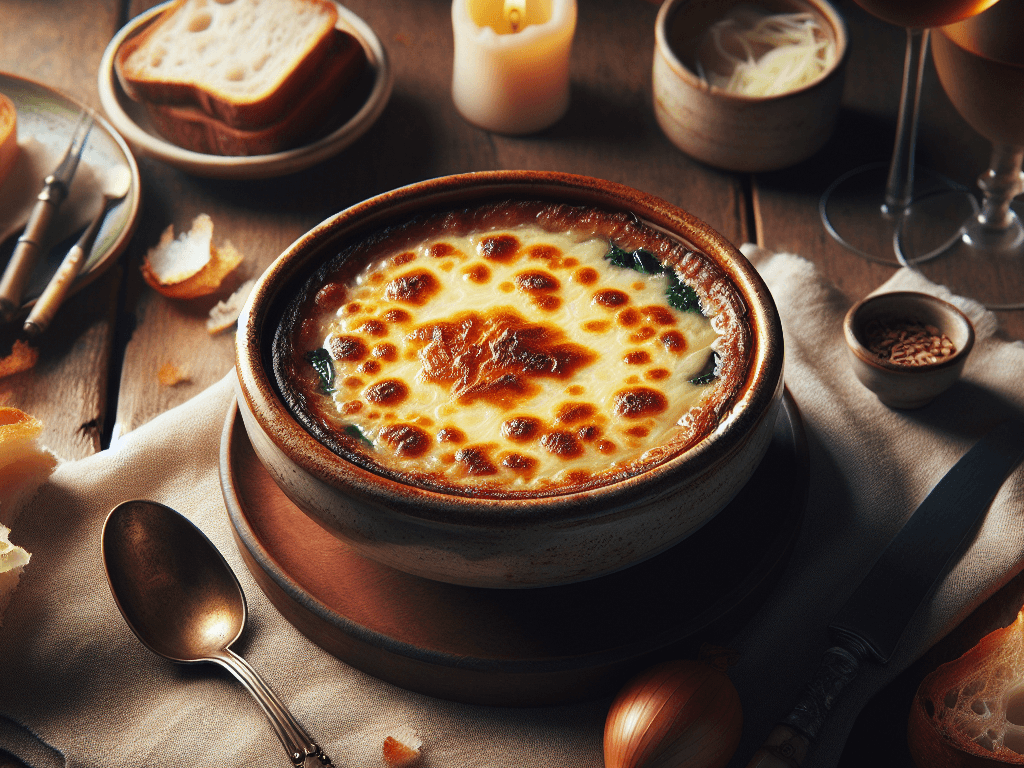
Slide the bowls under the broiler for three to five minutes, until the cheese is melted, bubbling, and golden brown with those irresistible crispy edges.
Watch carefully. The line between perfect and burned is thin.
Garnish with fresh thyme leaves and serve immediately. The bowls will be scorching hot, so warn your guests.
Serving and Pairing
Traditional soupe à l'oignon is a meal in itself. Serve it with a simple green salad dressed with vinaigrette and a glass of the same white wine you used in the soup.
A crisp Chardonnay or Sauvignon Blanc works beautifully. The acidity cuts through the richness of the cheese and the sweetness of the onions.
For beer lovers, a Belgian-style wheat beer or a crisp lager is surprisingly good.
A Bowl of History
When you make this soup, you are not just cooking dinner. You are participating in a tradition that spans millennia.
From the kitchens of Ancient Rome to the bustling markets of Les Halles. From the breakfast tables of the forts des Halles to the late-night feasts of Parisian partygoers.
Soupe à l'oignon has sustained workers, cured hangovers, and comforted the weary for thousands of years.
Make it on a cold winter night. Make it when you need comfort. Make it when you want to taste history.
Just do not rush the onions. |