"The Ultimate French Comfort Food: Unraveling the Mystery of Cassoulet de Toulouse"
The French Fork
Archives
"The Ultimate French Comfort Food: Unraveling the Mystery of Cassoulet de Toulouse"
SIGN UP FOR OUR NEWSLETTER
|
|

The French Fork
Jan 13, 2026
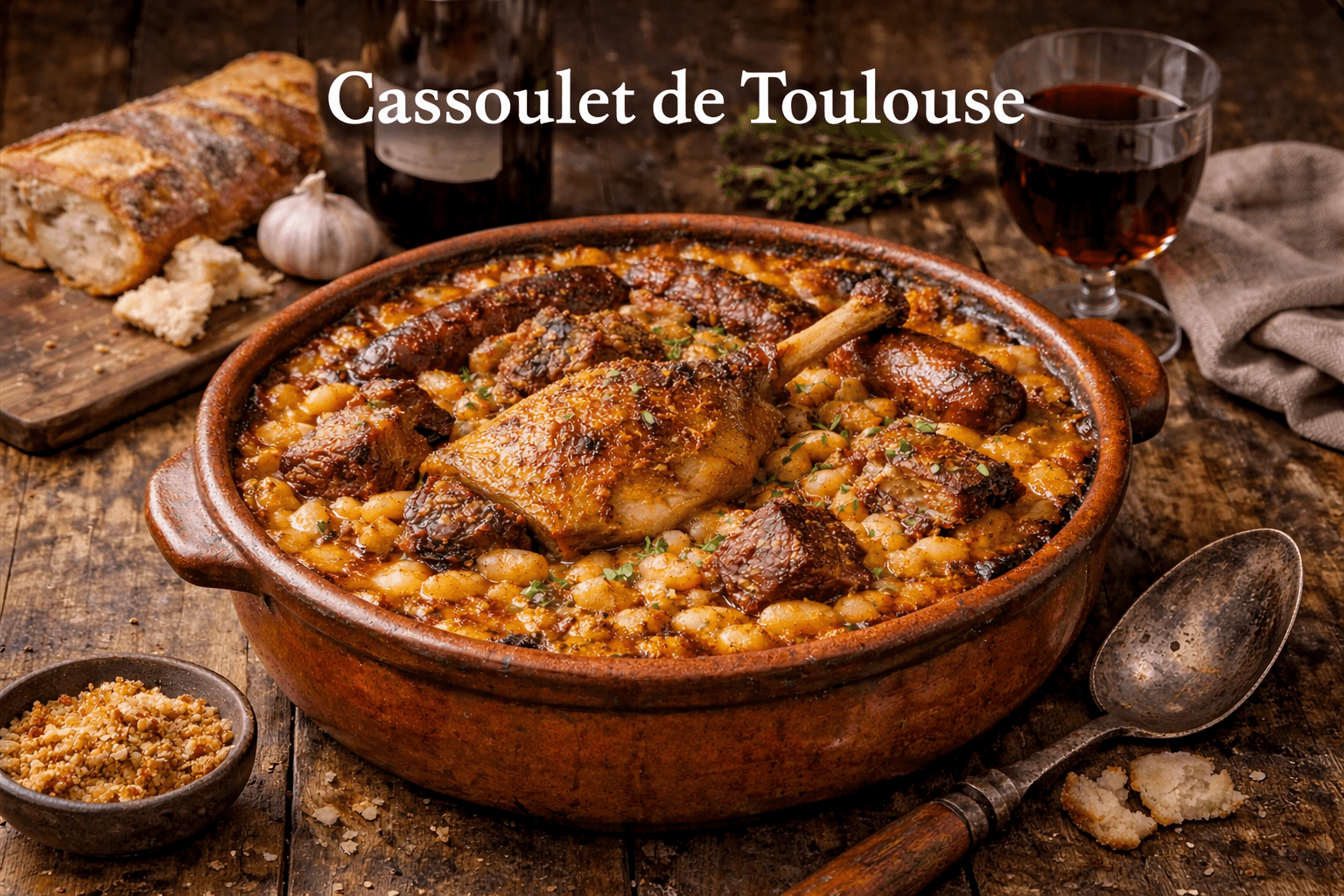 |
There are dishes that ask for speed and sparkle, and there are dishes that ask for patience. Cassoulet belongs firmly to the second family. It is not cooked, it is tended. It simmers, rests, listens to the kitchen, and rewards you hours later with something profoundly comforting. In the old houses around Toulouse, cassoulet was never a recipe written down. It was a rhythm, a way of using time, a way of feeding many with what the land offered: white beans, preserved duck, pork, garlic, and the quiet heat of the oven.
The name comes from the cassole, the wide, earthenware pot in which it is baked. Its crust forms, is broken, and forms again, sealing in richness each time. Some say this must happen seven times. We do not count. We listen. When the surface sighs and cracks, when the scent fills the house and lingers in the hallway, we know it is ready.
Cassoulet is a dish for Sundays, for long conversations, for red wine opened early and finished late. It is southern France in winter, when the markets are quieter and the kitchen becomes the warmest room in the house.
The heart of the dish
What makes a true cassoulet is balance. The beans must be tender but intact. The meats must give without falling apart. The broth should be rich but never greasy. Each spoonful should feel deep, rounded, and steady. This version stays faithful to Toulouse tradition, using duck confit, pork shoulder, and Toulouse sausages.
Cassoulet de Toulouse – The Recipe
Serves 6 generously
Ingredients
Dried white beans (lingot or haricot blanc), 500 g | 1.1 lb Duck confit legs, 4 Pork shoulder, cut into large chunks, 600 g | 1.3 lb Toulouse sausages, 4 Smoked pork rind or bacon slab, 150 g | 5 oz Onions, 2, finely chopped Carrots, 2, sliced Garlic cloves, 6, crushed Tomato paste, 2 tbsp Bouquet garni (thyme, bay leaf, parsley stems) Chicken stock, about 1.5 liters | 6 cups Goose fat or duck fat, 2 tbsp Salt and black pepper Fresh breadcrumbs, a handful (optional but traditional)
Preparation
The night before, soak the beans in plenty of cold water. Let them rest as the house sleeps.
The next day, drain the beans and place them in a large pot with the pork rind and fresh water. Bring gently to a simmer and cook for about 45 minutes, until just tender but not soft. Drain, discard the rind, and set the beans aside.
In a heavy pot, warm the duck fat and soften the onions and carrots over low heat. Add the garlic and tomato paste, letting it cook gently until fragrant. Add the pork shoulder, turning it so it colors lightly on all sides. Pour in enough stock to cover, add the bouquet garni, and let it simmer quietly for about 45 minutes.
Meanwhile, brown the sausages in a pan until golden, then set them aside. Remove the duck from its confit, wiping away excess fat.
Preheat the oven to 150°C | 300°F.
In a large cassole or deep ovenproof dish, begin layering. A spoonful of beans, some pork, a sausage split in half, a piece of duck, then beans again. Pour over enough cooking liquid to just cover the beans. Season lightly with pepper and only a little salt, the meats already bring their own.
Bake uncovered for 2 hours. As a crust forms, gently push it down into the cassoulet with the back of a spoon, allowing it to reform. Do this several times during cooking. If the dish looks dry, add a little warm stock.
For the final 30 minutes, scatter a light handful of breadcrumbs over the surface to encourage a golden crust.
Remove from the oven and let it rest for 15 minutes before serving. Cassoulet likes a pause.
What to pour alongside
Cassoulet calls for wines with backbone and warmth. Look to the South-West.
A Fronton made from Négrette brings spice and dark fruit that echo the dish beautifully. A Minervois offers structure without heaviness. If you prefer white, a rich Gaillac with some age can surprise you.
A dish that teaches patience
Cassoulet does not rush you. It asks you to slow down, to accept that good things take time, and that the kitchen can be a place of quiet attention rather than speed. It tastes even better the next day, when the flavors have settled into one another and the house remembers what happened in the oven.
And if you ever find yourself near Toulouse on a cold afternoon, listen for the sound of spoons against earthenware. That is where cassoulet is waiting. |