The French Fork
Archives
"A Quiet French Evening, Served in Three Courses"

Subscribe
The French Fork
Archives
"A Quiet French Evening, Served in Three Courses"
The French Fork
Jan 17, 2026
Fall in love with France, one recipe at a time. A weekly recipes letter for those who love French food in all its glory. |
Trivia Question❓What French dish, typically served in French restaurants, was created in the early 20th century at Hotel Tatin in Lamotte-Beuvron? Answer at the bottom of the newsletter |
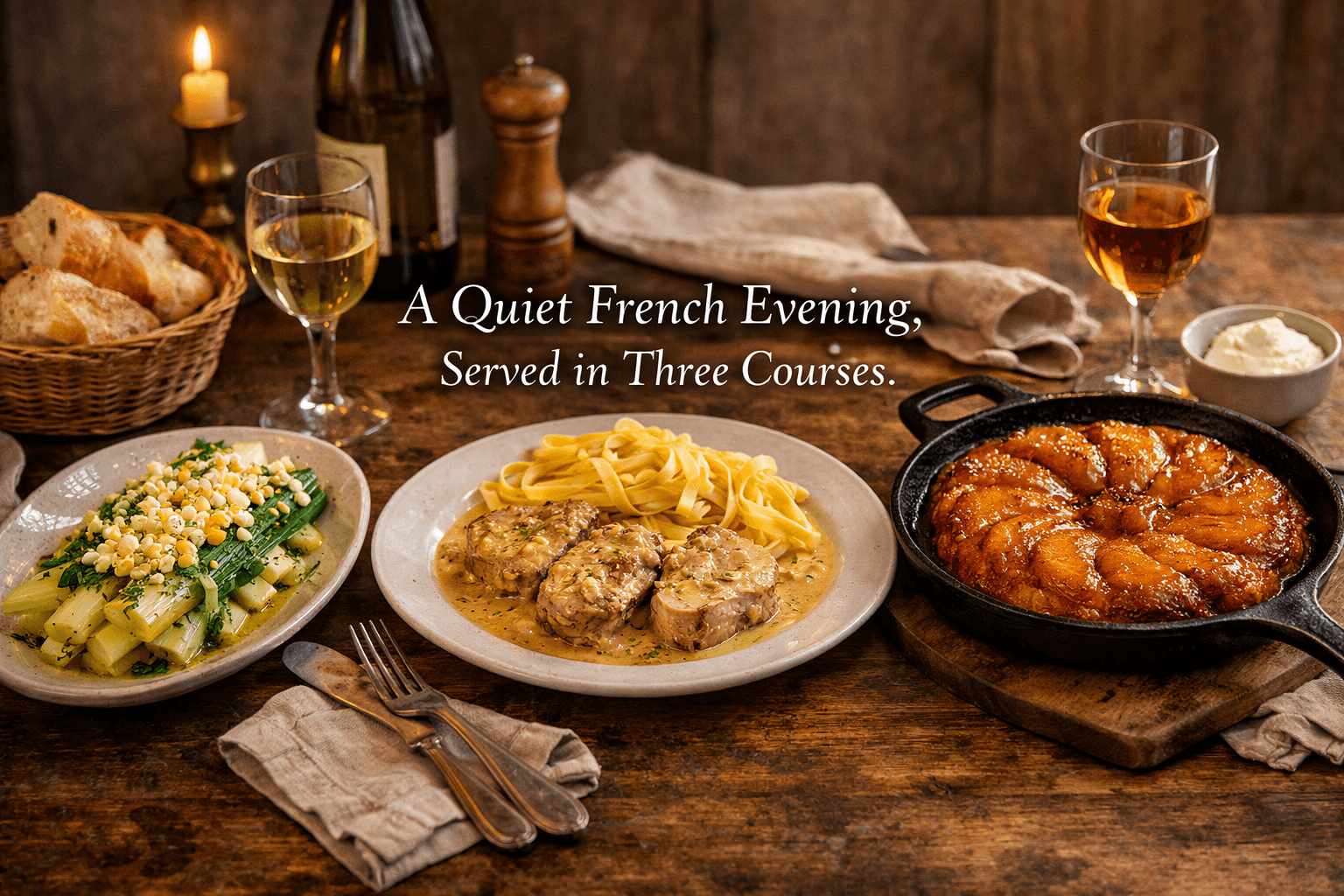
A Quiet French Evening, Served in Three Courses |
From tender leeks to pork in mustard cream and apples caramelised in butter, this is how France slows the day. |
 |
There are evenings when French cooking does not try to impress. It simply settles in.
The pan warms slowly. A cork turns without ceremony. Outside, the day releases its grip. This is not a meal for celebration, but for restoration.
Tonight’s menu follows that instinct. Vegetables first, gently dressed. A main course that simmers without urgency. And a dessert that trusts butter, apples, and time.
Three courses. No rush. No excess. Just food that understands its role. |
Starter |
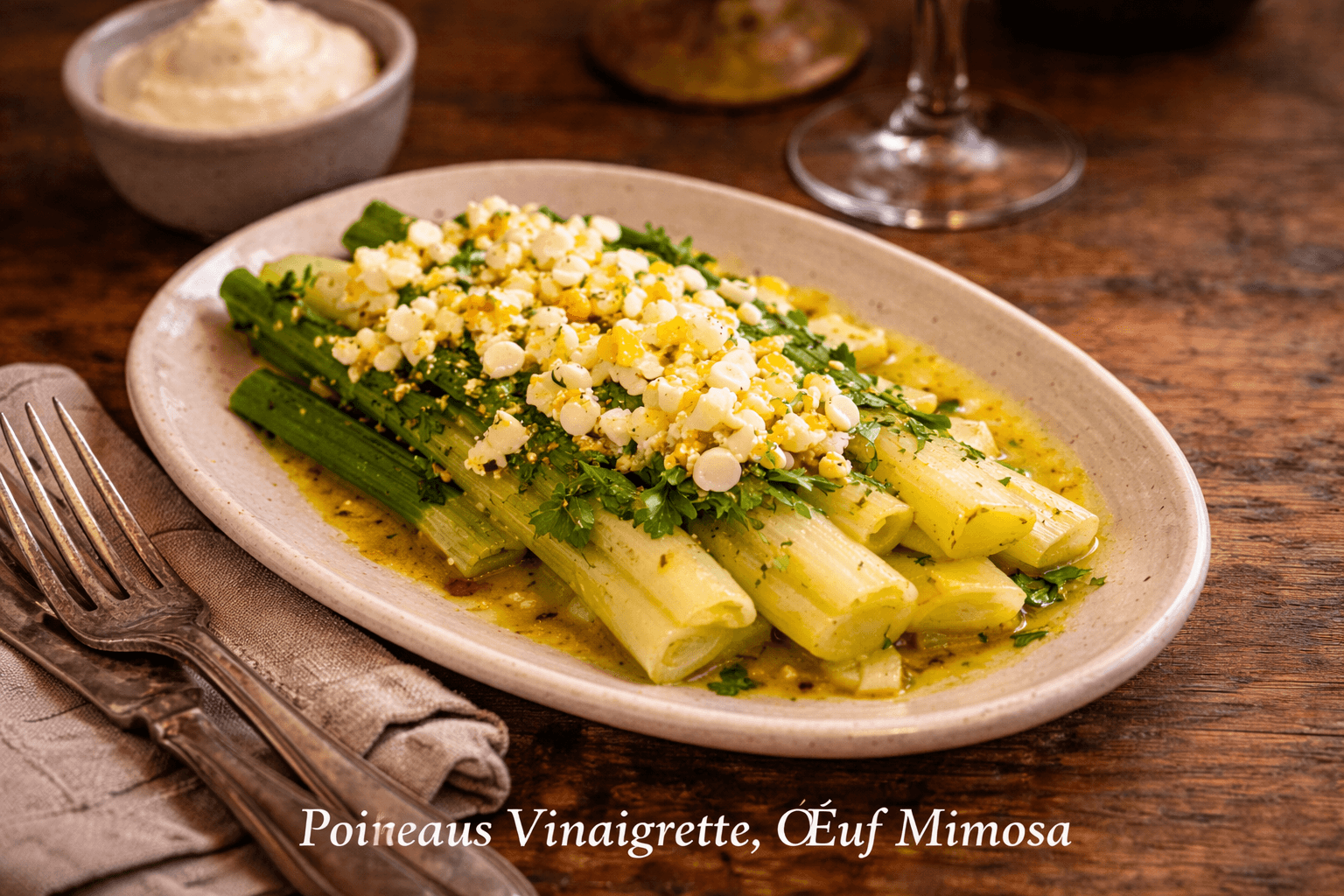 |
Poireaux Vinaigrette, Œuf Mimosa
In France, leeks are treated with quiet respect.
They are cooked until just tender, never collapsing, then allowed to cool slightly so they can absorb a sharp, confident vinaigrette. The chopped egg brings softness, a gentle counterpoint to the mustard and vinegar.
This dish opens the appetite rather than filling it. A pause. A breath. A beginning.
Recipe – Serves 4
Ingredients 4 large leeks 2 eggs 1 tablespoon Dijon mustard 2 tablespoons red wine vinegar 5 tablespoons good olive oil Salt and freshly ground black pepper
Preparation
Trim the leeks, keeping only the white and pale green parts. Rinse thoroughly to remove all grit. Tie them loosely if needed to keep their shape.
Cook the leeks gently in salted simmering water for about 15 to 20 minutes, until a knife slides in easily. Drain carefully and let them cool to lukewarm.
Hard-boil the eggs for 9 minutes, then cool, peel, and finely chop.
Whisk the mustard with the vinegar, then slowly incorporate the olive oil until smooth. Season generously.
Arrange the leeks on a platter, spoon over the vinaigrette, and finish with the chopped egg. Serve slightly warm or at room temperature.
Wine pairing Muscadet or a dry Loire Sauvignon Blanc. Clean, mineral, refreshing. |
 |
Main Course |
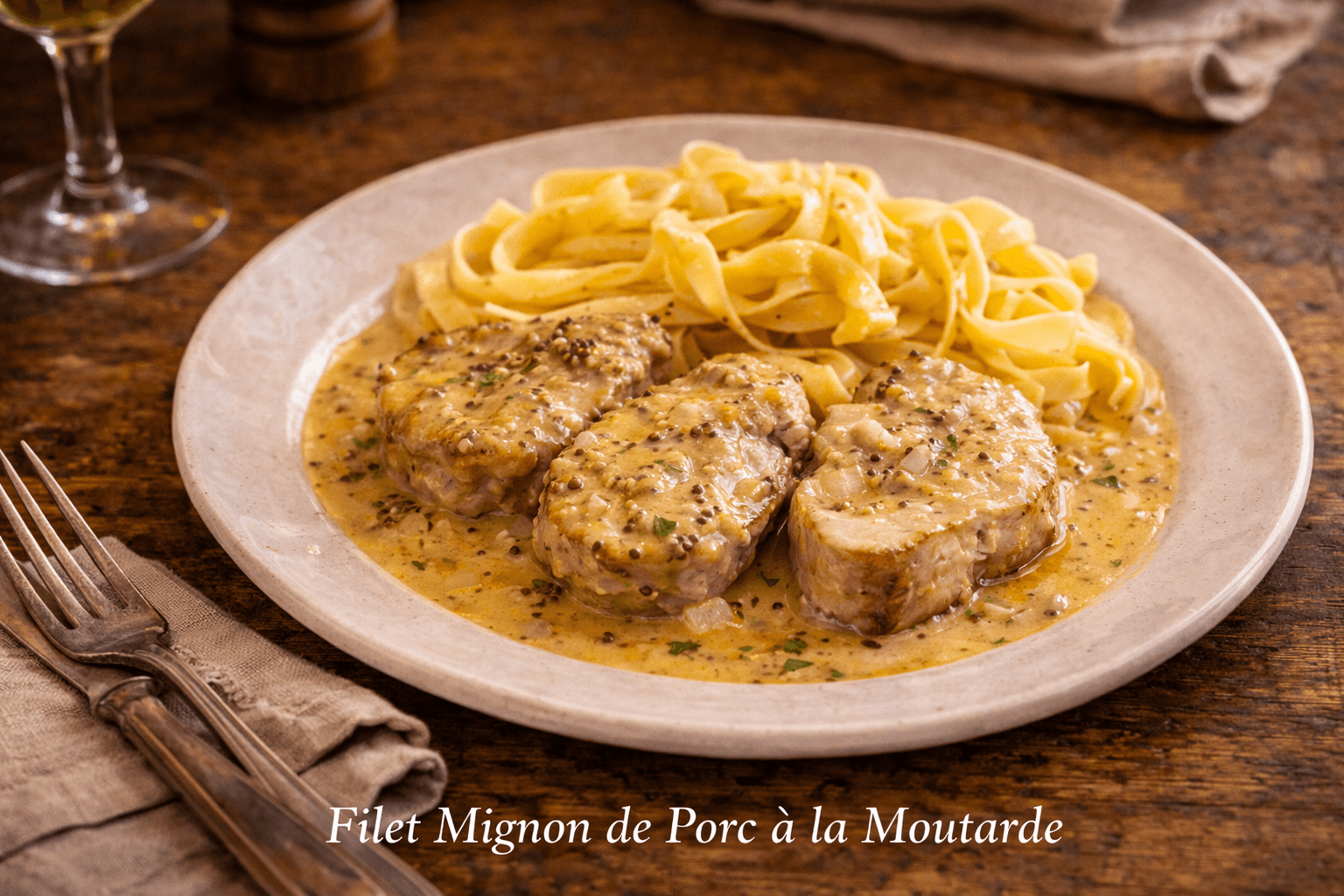 |
Filet Mignon de Porc à la Moutarde
This is the kind of dish that feels like a Sunday even on a weekday.
Pork tenderloin is treated gently, browned just enough, then eased into a sauce of mustard, shallots, white wine, and cream. The heat stays low. The sauce thickens slowly. Nothing is rushed.
Served with potatoes or fresh pasta, it becomes the centre of the table, inviting silence between bites.
Recipe – Serves 4
Ingredients 2 pork tenderloins, about 450 g / 1 lb total 2 shallots, finely chopped 2 tablespoons Dijon mustard 1 tablespoon whole-grain mustard 120 ml / ½ cup dry white wine 200 ml / ¾ cup crème fraîche or heavy cream 2 tablespoons butter Salt and freshly ground black pepper
Preparation
Season the pork generously with salt and pepper.
Heat the butter in a wide pan over medium heat. Brown the pork on all sides until lightly coloured. Remove and set aside.
In the same pan, add the shallots and cook gently until soft and translucent. Deglaze with the white wine, scraping the pan, and let it reduce by half.
Stir in both mustards, then add the cream. Return the pork to the pan, lower the heat, cover, and let it simmer gently for about 15 minutes, turning once, until just cooked through.
Slice the pork and spoon over the sauce.
Wine pairing White Burgundy such as Mâcon or Saint-Véran. Round, balanced, quietly supportive. |
 |
Dessert |
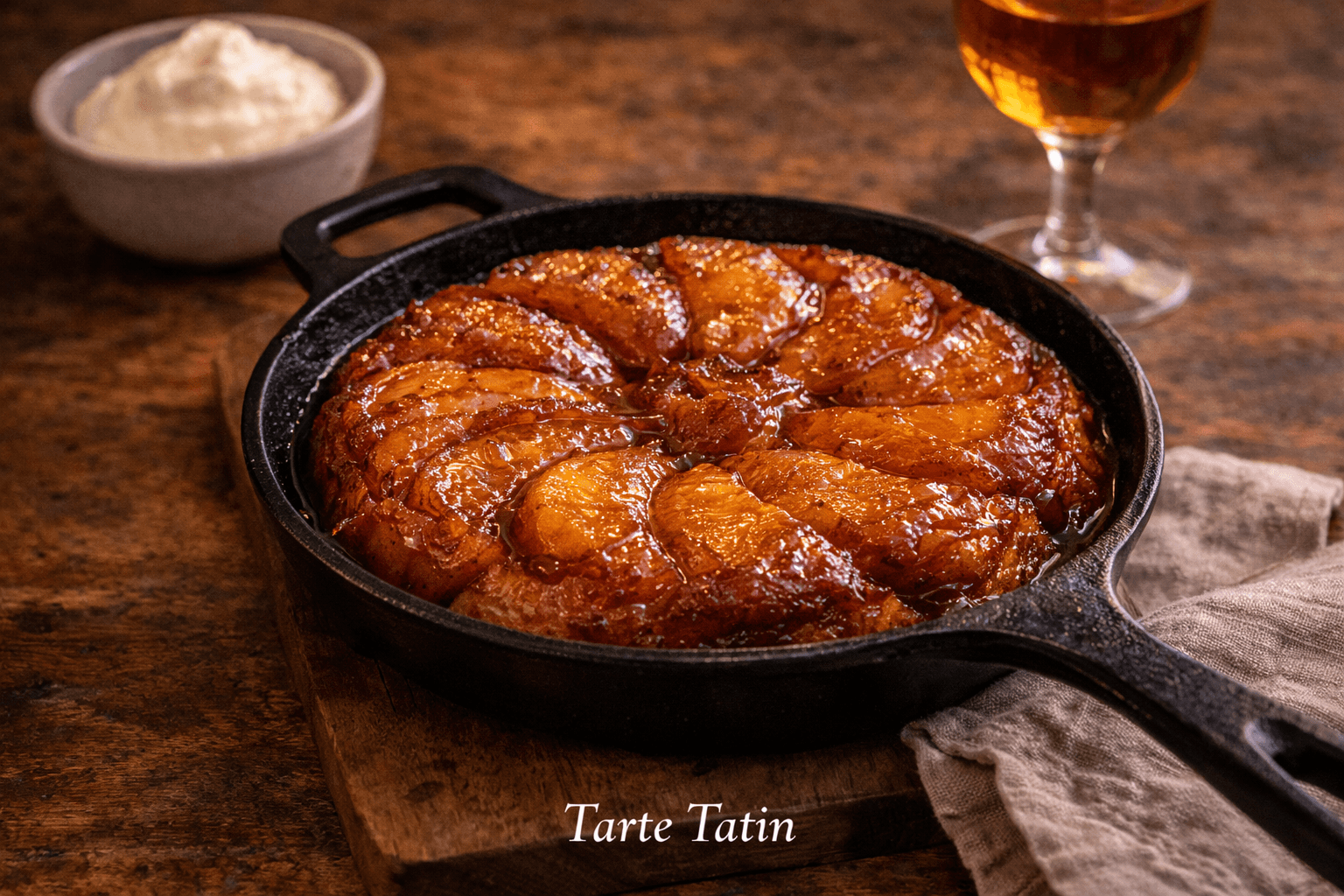 |
Tarte Tatin
Tarte Tatin asks for trust
Apples are caramelised slowly in butter and sugar until they surrender. Pastry is placed on top, almost casually, before the whole thing is baked and turned upside down at the last moment.
What was hidden becomes the surface. What seemed risky becomes inevitable.
Recipe – Serves 6
Ingredients 6 firm apples, peeled, halved, cored 100 g / ½ cup sugar 80 g / 6 tablespoons butter 1 sheet puff pastry Optional: crème fraîche, to serve
Preparation
Preheat the oven to 190°C / 375°F.
In an oven-proof pan, melt the butter with the sugar over medium heat until it turns a deep golden caramel. Arrange the apples tightly in the pan, cut side up, and cook gently for about 15 minutes, spooning caramel over them.
Place the puff pastry over the apples, tucking in the edges. Bake for 30 minutes until the pastry is golden.
Let rest for 5 minutes, then invert carefully onto a plate.
Serve warm.
Wine pairing Vouvray moelleux or Coteaux du Layon. Soft sweetness, apple echoing apple. |
 |
Recipe Articles |
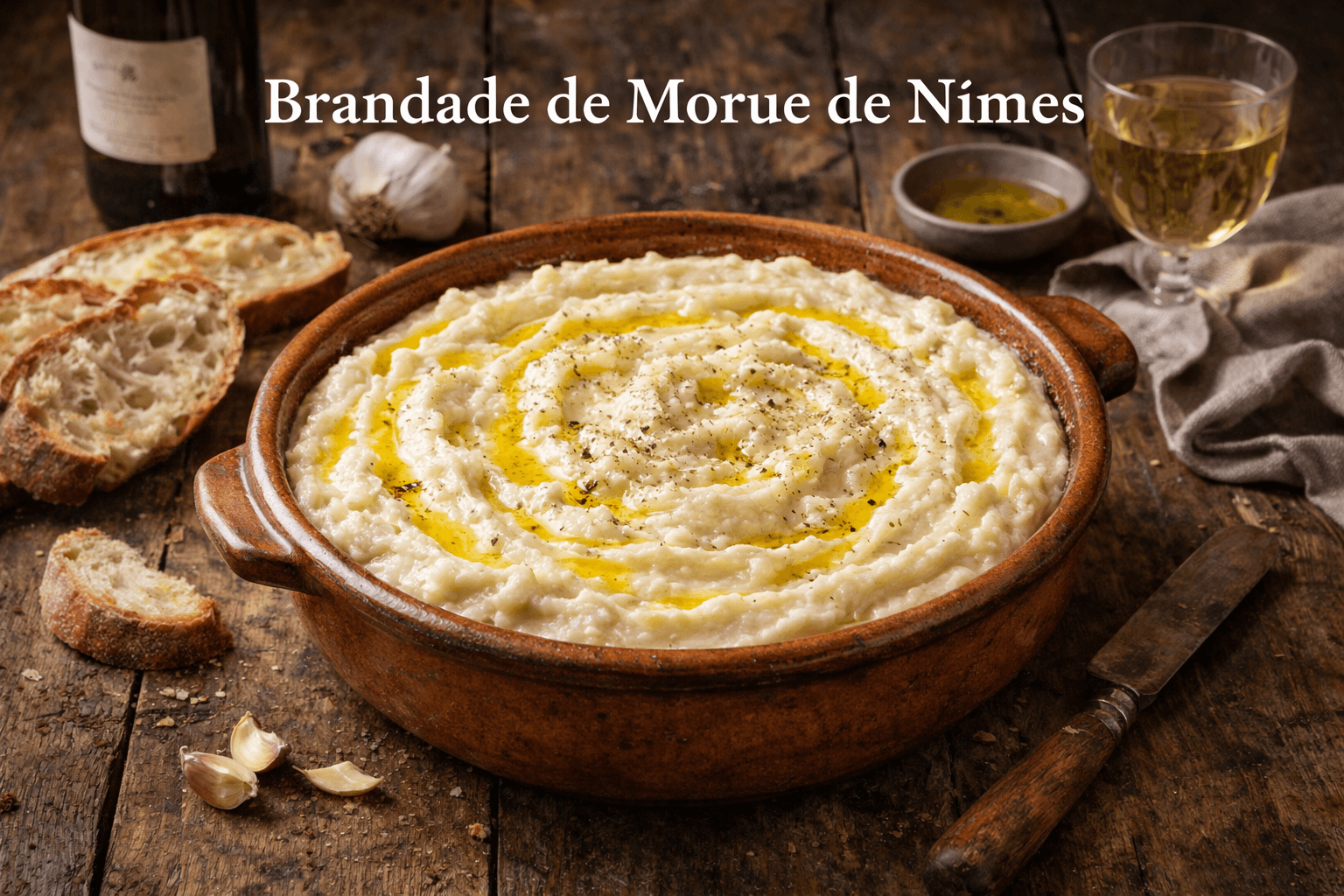 |
Brandade is a cherished specialty in Nîmes, famous for its subtlety and depth.
Combining salt cod, olive oil, milk, and garlic, this Provençal dish exemplifies restraint — no unnecessary herbs or shortcuts distract from its silky texture.
Preparation is unhurried; salt cod is soaked then gently simmered with garlic and bay leaf, before being slowly folded with olive oil to create a smooth, luminous spread.
Traditionally enjoyed with rustic bread and paired with local white wines like Picpoul de Pinet or a Costières de Nîmes, brandade stands at the crossroads of land and sea, a result of historical trade and preservation.
Whether served warm for comfort in winter or cool as a summer refresher, this dish rewards patience with flavors that are both humble and quietly luxurious — a time-honored staple of southern French tables. Read More... |
 |
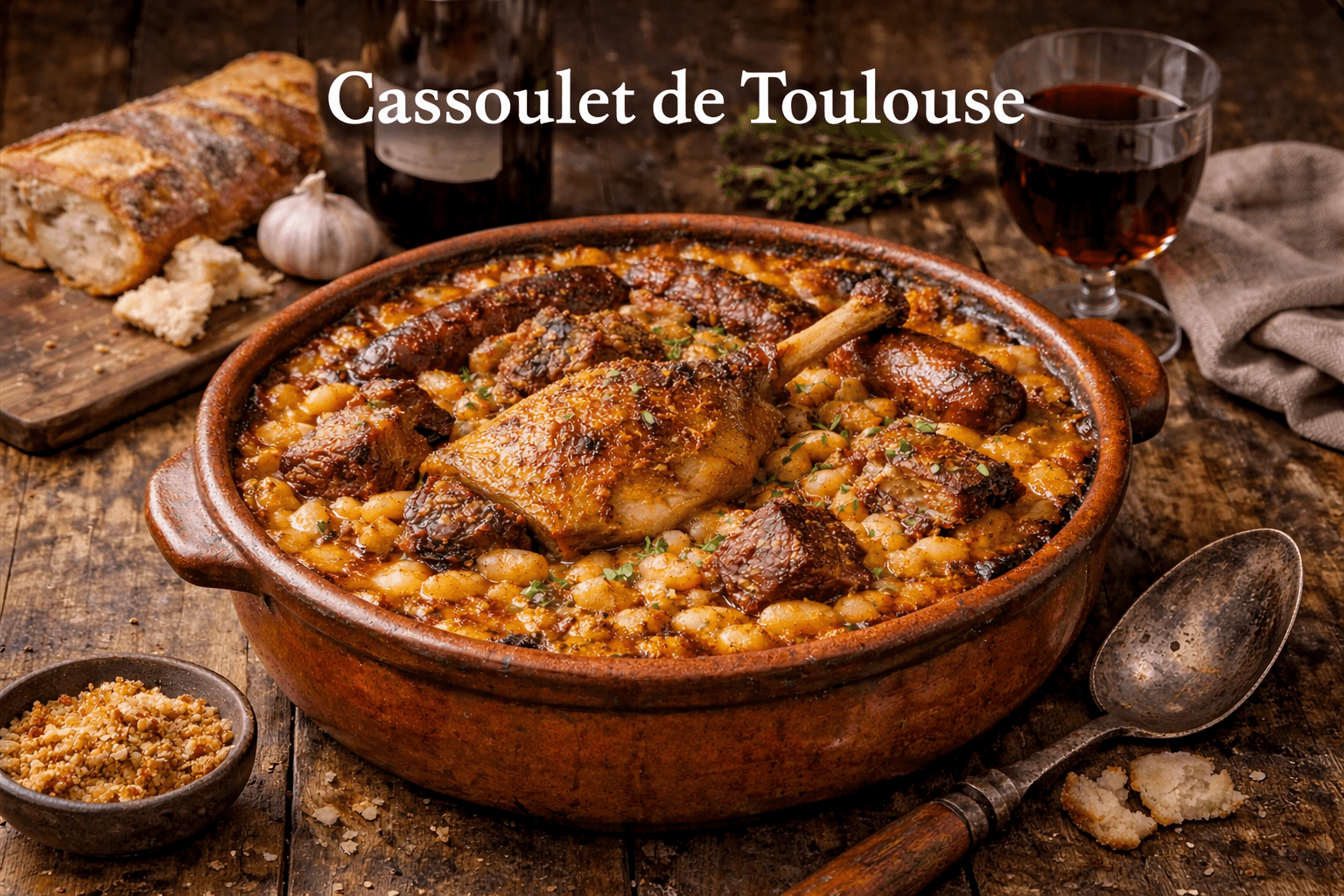 |
Cassoulet, a classic from Toulouse, is a dish demanding time, care, and local tradition.
This slow-cooked meal is more than a recipe—it's a ritual shaped by generations, woven from white beans, preserved duck, pork, garlic, and the gentle heat of a winter oven.
The name comes from the cassole—the wide earthenware pot where cassoulet gently bakes, forming and reforming its savory crust.
Integral to southern French kitchens during colder months, cassoulet brings families together over hours of conversation, lingering scents, and generous helpings.
A true Toulouse cassoulet balances tender beans, meltingly rich duck confit, pork shoulder, and sausages.
Locals pair it with hearty wines like Fronton or Minervois, creating the ultimate, comforting winter meal.
Above all, cassoulet rewards patience and offers deep comfort—the taste of home and history in every spoonful. Read More... |
 |
And so…
This is not a menu for applause. It is a menu for evenings that ask for kindness.
If you cook it slowly, with the radio low and the table already set, it will give back more than it takes.
And next time you pass a market stall with leeks still damp from the field, you’ll know exactly what to do.
À très bientôt, The French Fork
|
💡 Answer to Trivia Question: Tarte Tatin, a caramelized upside-down apple tart. |
Follow us on Facebook: www.facebook.com/thefrenchfork |
Mail us today at: |
THIS PUBLICATION SPONSORED BY