The French Fork
Archives
A Gentle French Winter Menu 🍊🍷

Subscribe
The French Fork
Archives
A Gentle French Winter Menu 🍊🍷
The French Fork
Dec 20, 2025
Fall in love with France, one recipe at a time. A weekly recipes letter for those who love French food in all its glory. |
Trivia Question❓In a traditional French restaurant setting, what are the three main utensils typically provided at each place setting for dining? Answer at the bottom of the newsletter |
A Quiet Winter Table in France |
Three gentle courses to slow the season down |
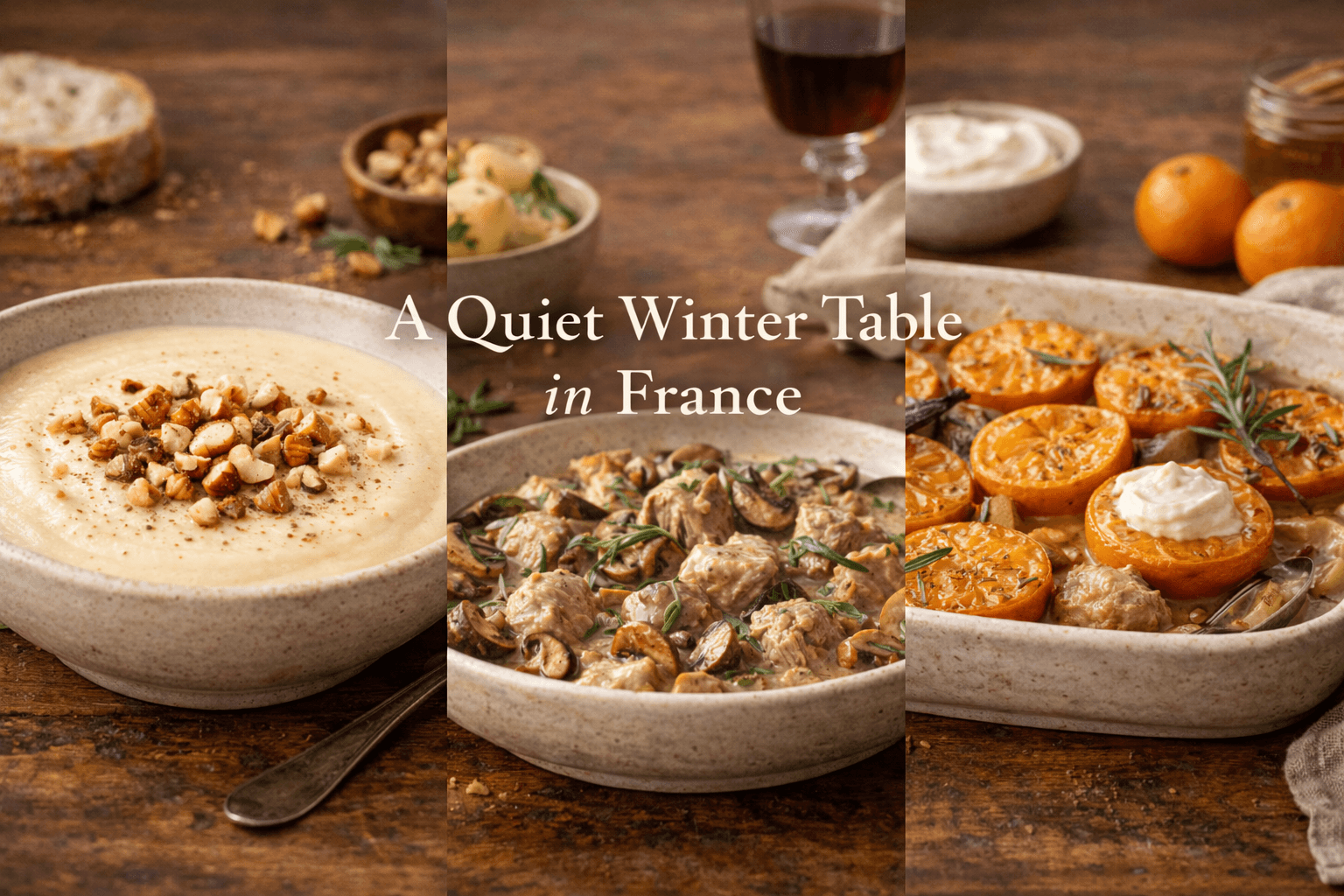 |
Winter cooking in France is not about spectacle. It is about warmth, rhythm, and dishes that feel right for the moment. This week’s menu is built around softness and balance.
A silky parsnip velouté to begin, a tender veal sauté at the heart of the table, and warm roasted clementines to close the evening gently.
Nothing rushes. Nothing overwhelms. These are dishes meant to be cooked calmly, shared slowly, and remembered fondly. |
Starter |
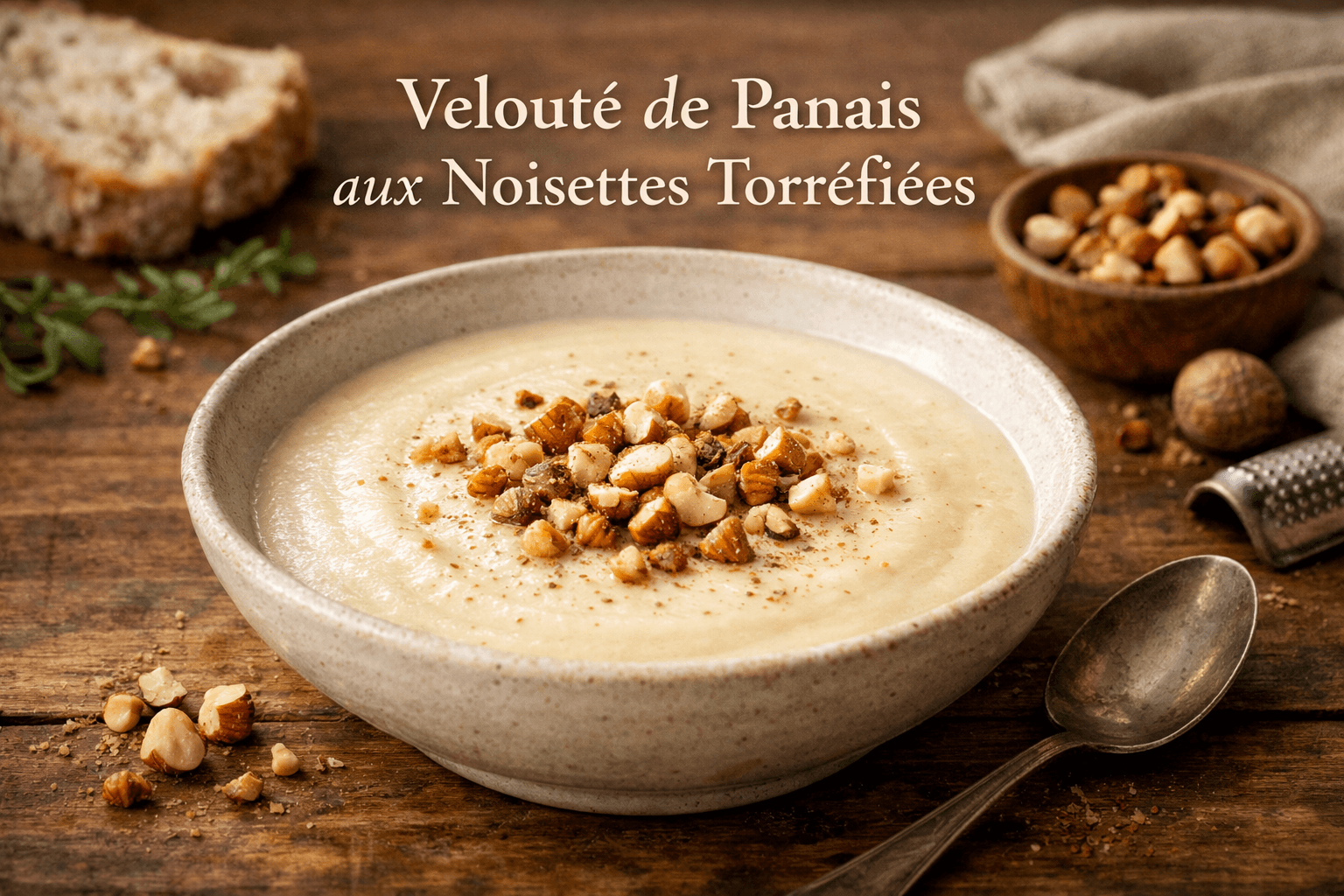 |
Velouté de Panais aux Noisettes Torréfiées
A winter-soft French soup where earthiness meets elegance
There is something deeply reassuring about a velouté simmering quietly on the stove. The sound is barely audible, a soft whisper rather than a boil, as if the soup itself understands that haste has no place here. This parsnip velouté is one of those dishes that does not shout for attention. It waits patiently, rewarding those who slow down enough to notice its gentle sweetness and subtle warmth.
Parsnips were once far more common on French tables than they are today. Before potatoes claimed their throne, these pale roots carried winter meals through long, cold months. Their flavor is humble but complex, earthy with a natural sweetness that deepens when cooked slowly. In this velouté, the parsnip becomes silk. Creamy without excess, comforting without heaviness.
The base is simple. Onion softened in butter until translucent, never browned. Parsnips sliced thinly so they surrender easily, releasing their aroma as soon as they meet the heat. A light stock, just enough to carry the vegetables, never to dominate them. As the soup simmers, the kitchen fills with a soft, almost nutty scent, warm and inviting.
The real pleasure comes at the finish. A touch of nutmeg sharpens the sweetness, while roasted hazelnuts bring contrast. Their crunch breaks through the velvety texture, their toasted aroma echoing the parsnip’s own earthiness. This interplay of smooth and crisp, sweet and savory, is what gives the dish its quiet sophistication.
Served as a starter, this velouté sets the tone for the meal ahead. It opens the appetite without overwhelming it, warming both hands and mood. It feels seasonal, rooted, honest. The kind of dish that reminds us that French cooking, at its best, is not about complexity but about respect for ingredients and time.
Recipe
Serves 4
Ingredients
Method
Melt the butter in a heavy saucepan over medium heat. Add the onion and cook gently until soft and translucent, about 5 minutes. Do not let it brown.
Add the parsnips and stir to coat them in the butter. Cook for 2 minutes, then pour in the stock. Bring to a gentle simmer and cook for 20 minutes, until the parsnips are completely tender.
While the soup cooks, toast the hazelnuts in a dry pan over medium heat until fragrant and lightly golden. Set aside.
Blend the soup until perfectly smooth. Stir in the cream, season with salt, white pepper and a small pinch of nutmeg. Reheat gently without boiling.
Serve hot, topped with the toasted hazelnuts.
Wine pairing
A Mâcon-Villages Chardonnay works beautifully here. Its roundness and gentle acidity mirror the soup’s softness while keeping the palate fresh. |
Main Course |
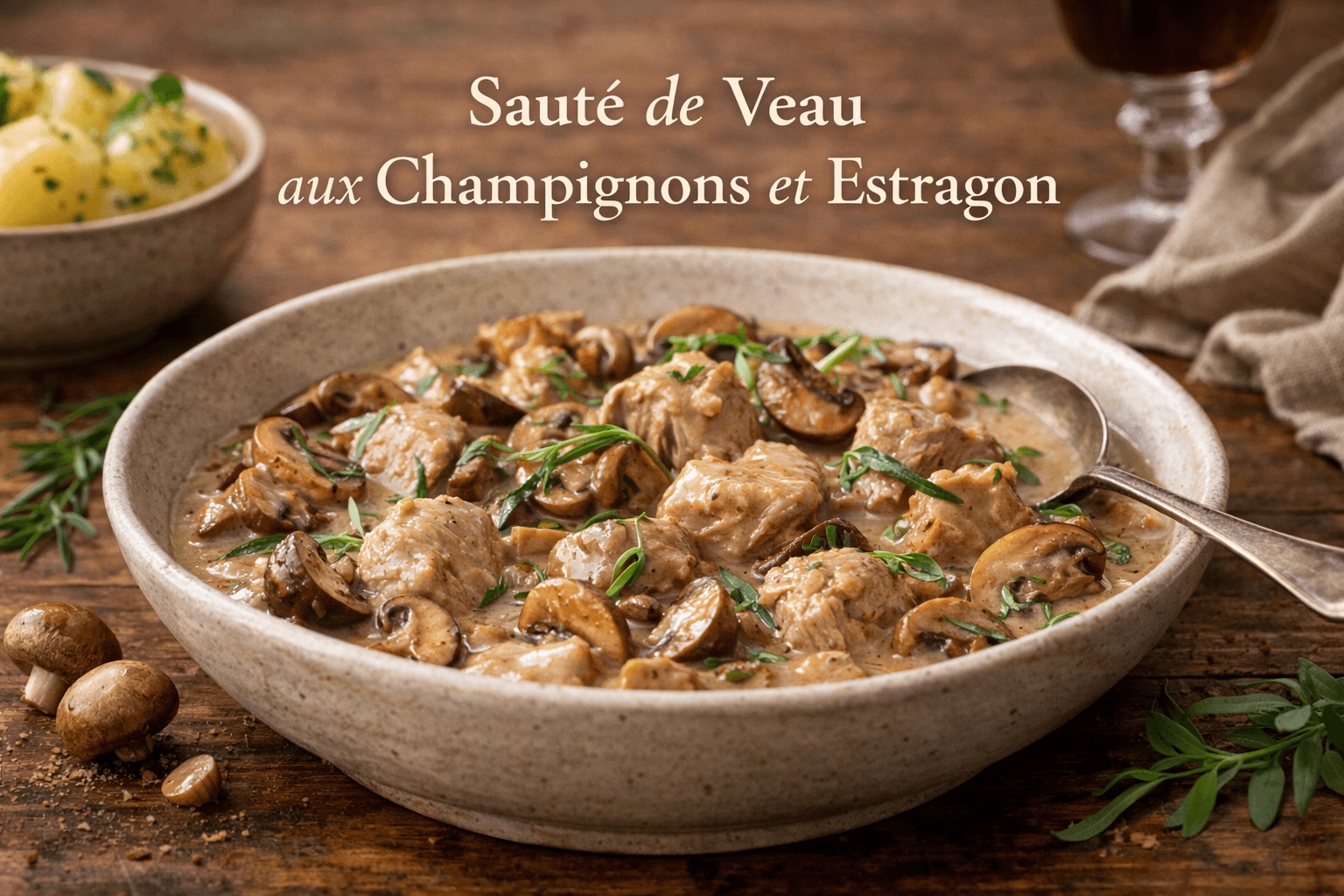 |
Sauté de Veau aux Champignons et Estragon
Tender veal, earthy mushrooms, and the quiet perfume of fresh tarragon
There are dishes that announce themselves loudly, and others that reveal their beauty slowly, almost shyly. This veal sauté belongs firmly to the second group. It is a dish of restraint, of balance, of patience. Nothing here overwhelms. Everything supports.
Veal has always held a special place in French home cooking. Valued not for boldness but for delicacy, it rewards careful handling. Cooked too fast or too fiercely, it tightens and loses its grace. Treated gently, it becomes meltingly tender, carrying the flavors around it like a soft canvas.
The mushrooms arrive first, bringing the forest into the kitchen. Champignons de Paris are traditional, but a mix with cremini or small brown mushrooms adds depth. They are sautéed patiently, moisture released and evaporated, their flavor concentrating until they are golden and aromatic. This step is never rushed. It is where the soul of the dish begins to form.
Shallots follow, sweet and mild, dissolving into the pan. Then the veal, cut into generous pieces, seared just enough to color the outside while keeping the inside pale and tender. The pan hisses briefly, then settles back into calm.
White wine lifts the fond, releasing everything the pan has been holding back. A light stock follows, just enough to create a gentle sauce rather than a stew. The dish simmers quietly, lid half on, time doing most of the work.
And then, at the very end, comes the estragon. Never earlier. Tarragon is confident but fragile. Its aniseed note brightens the sauce, cutting through the richness with elegance. Added too soon, it fades. Added at the finish, it sings.
This is a main course that feels both comforting and refined. Served with simple buttered potatoes or fresh tagliatelle, it anchors the meal without weighing it down. After the softness of the parsnip velouté, this veal dish deepens the experience, grounding it, preparing the palate for the lightness to come.
It is not flashy food. It is confident food. The kind that tells you everything is exactly as it should be.
Recipe
Serves 4
Ingredients
Method
Heat the butter and olive oil together in a wide, heavy pan over medium heat. Add the mushrooms and cook patiently until their moisture has evaporated and they are lightly golden. Remove and set aside.
In the same pan, add the shallots and cook gently until soft. Increase the heat slightly and add the veal. Sear briefly on all sides until just colored.
Deglaze with the white wine, scraping the bottom of the pan. Let it reduce by half, then add the stock. Lower the heat, cover partially, and simmer gently for 35 minutes, until the veal is tender.
Return the mushrooms to the pan. Stir in the cream and simmer uncovered for 5 minutes to thicken slightly. Season with salt and white pepper.
Remove from the heat and fold in the fresh tarragon just before serving.
Wine pairing
A Beaujolais-Villages or a light Bourgogne Pinot Noir pairs beautifully. Both respect the delicacy of the veal while echoing the earthiness of the mushrooms. |
Dessert |
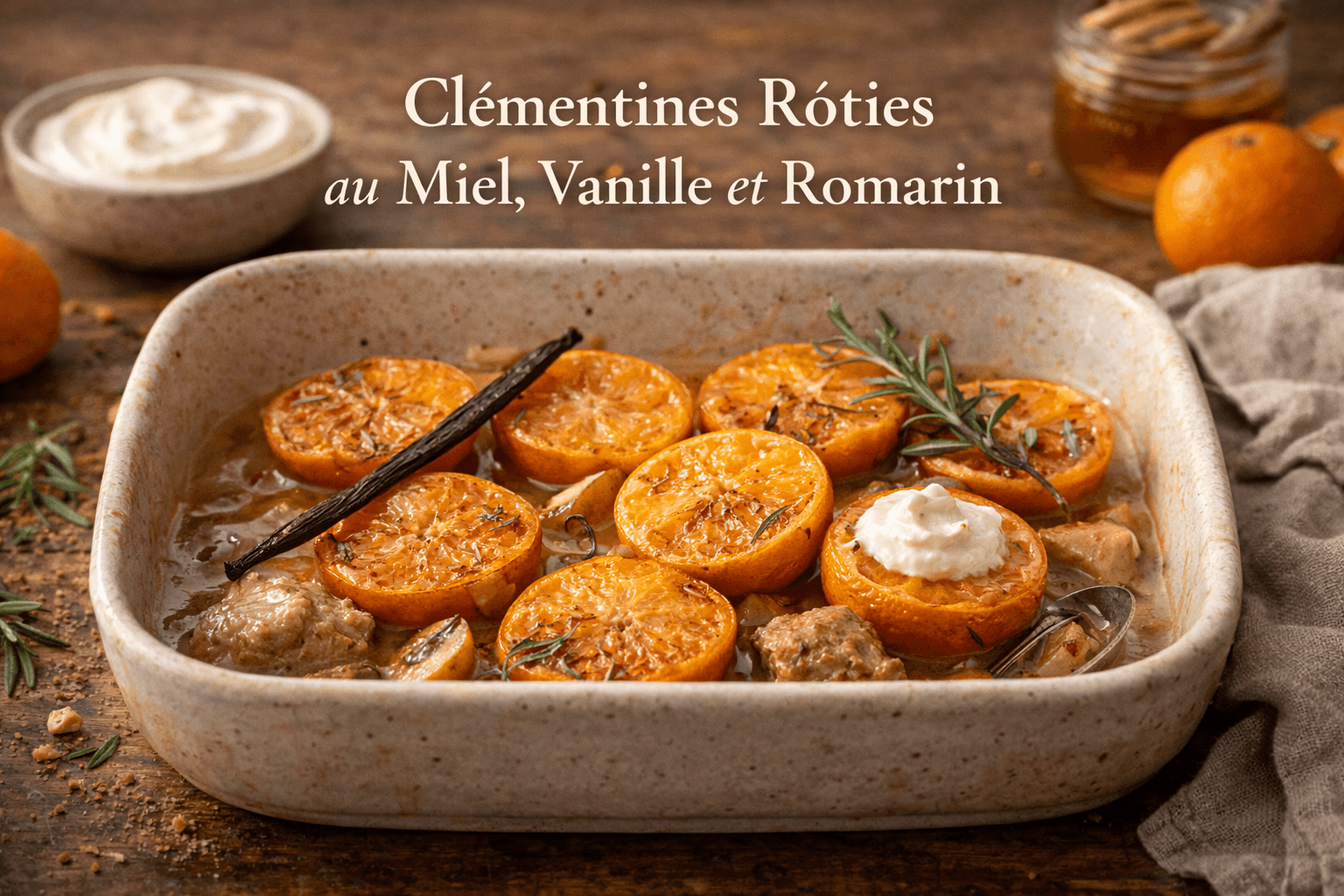 |
Clémentines Rôties au Miel, Vanille et Romarin
Warm citrus, gentle honey, and a whisper of rosemary
Dessert does not always need to impress. Sometimes its role is simply to let go. After the warmth of parsnip and the depth of veal, this dish arrives like a breath of fresh air through an open kitchen window.
Clementines are winter’s small luxury. Easy to peel, fragrant, bright. When roasted, they soften and release their juices, their acidity mellowing into something rounder, almost floral. Heat transforms them, but only just. They remain recognizably themselves.
Honey adds warmth and softness, vanilla deepens the sweetness without making it heavy, and rosemary brings restraint. Just a hint. Enough to surprise the palate and remind us that French desserts often flirt with savory notes.
As they roast, the kitchen fills with a perfume that feels both festive and calm. Citrus oils, warm honey, piney rosemary. It is a dessert that feels light but intentional, simple but composed.
Served warm, perhaps with a spoon of thick yogurt or a little crème fraîche, these clementines close the meal gently. No sugar rush, no heaviness. Just clarity and comfort.
This is how a meal should end. Not with fireworks, but with ease.
Recipe
Serves 4
Ingredients
Method
Preheat the oven to 180°C (350°F).
Arrange the clementines cut-side up in a baking dish. Drizzle evenly with the honey. Scatter the vanilla seeds over the fruit and add the empty pod to the dish. Tuck the rosemary sprig between the clementines and dot with butter.
Roast for 20 to 25 minutes, basting once, until the fruit is tender and lightly caramelised.
Remove the rosemary and vanilla pod before serving. Serve warm, with a spoon of crème fraîche or thick yogurt if desired.
Wine pairing
A Vouvray demi-sec or a lightly sweet Muscat d’Alsace complements the citrus and honey beautifully without overpowering the dish. |
Recipe Articles |
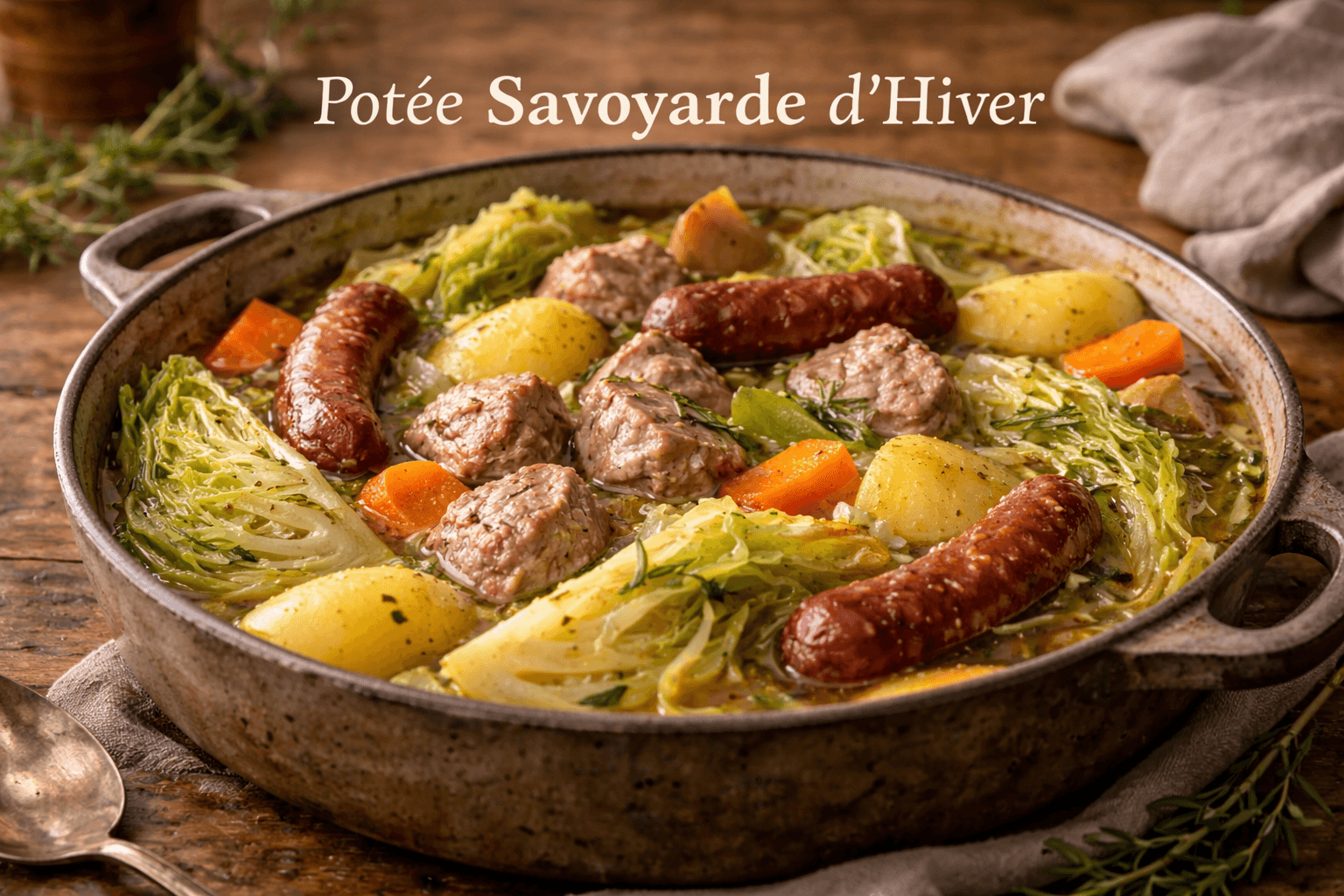 |
Potée Savoyarde is more than a winter dish — it’s a tradition in the Alpine region of Savoie, crafted to provide deep comfort against biting cold.
This hearty mountain stew centers on pork shoulder, smoked sausages, green cabbage, and potatoes, all simmered slowly until their flavors meld in a rich, savory broth.
Every step is about patience: vegetables are added in waves, infusing the kitchen with warmth, bay, garlic, and peppercorns.
The result is unpretentious nourishment, served straight from the pot alongside mustard and crusty bread, encouraging quiet satisfaction around the table.
Potée Savoyarde is a testament to resilience, seasonality, and care in French mountain cooking, transforming austere winter days into moments of comfort and community.
A crisp Savoie white like Jacquère pairs beautifully, balancing the stew’s richness with freshness. Read More... |
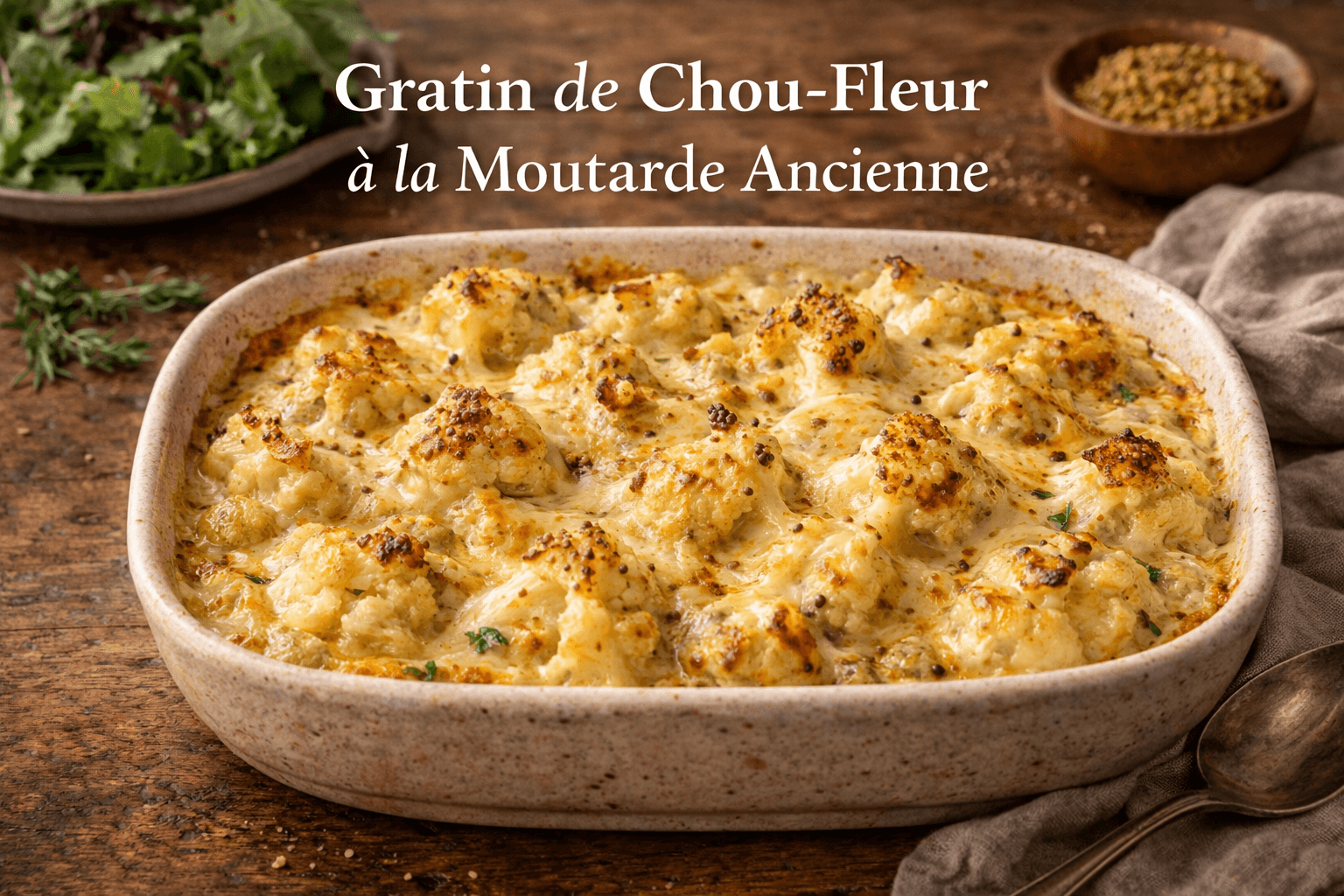 |
Cauliflower often gets overlooked in winter, but when treated gently, it transforms into a dish that is both comforting and elegant.
This French-inspired gratin celebrates the vegetable’s subtle flavors by cooking cauliflower just until tender, preserving its gentle bite.
A luscious cream and milk sauce, lifted with grainy moutarde ancienne and a hint of nutmeg, brings unexpected warmth and depth without overpowering.
Gruyère melts into the sauce, binding each floret, while the top emerges golden and crisp from the oven.
This dish is satisfying yet never heavy — perfect as a vegetarian main with a winter salad, or as a side alongside roasted veggies or lentils.
Serve with a Jura Chardonnay or light Gamay to complement its delicate, savory notes.
Winter cooking, proven simple, balanced, and deeply rewarding. Read More... |
 |
 |
And so…
This is the kind of meal that leaves the kitchen calm and the table satisfied. No heaviness, no excess, just the feeling that everything has found its place. And if you linger a little longer over the last glass of wine, that is exactly the point.
Until next week, keep cooking gently. Bon appétit |
💡 Answer to Trivia Question: The three main utensils typically provided at each place setting in a French restaurant are a fork, a knife, and a spoon. |
Follow us on Facebook: www.facebook.com/thefrenchfork |
Mail us today at: |
THIS PUBLICATION SPONSORED BY