The French Fork
Archives
"A Quietly Confident French Three-Course Dinner"
Subscribe
The French Fork
Archives
"A Quietly Confident French Three-Course Dinner"
The French Fork
Dec 13, 2025
Fall in love with France, one recipe at a time. A weekly recipes letter for those who love French food in all its glory. |
Trivia Question❓In a French restaurant, what specific utensil is used to scoop out the soft, creamy interior of a baked escargot dish? Answer at the bottom of the newsletter |
A Quietly Confident French Three-Course Dinner |
Three classic French dishes, chosen for balance, restraint, and quiet depth of flavour. |
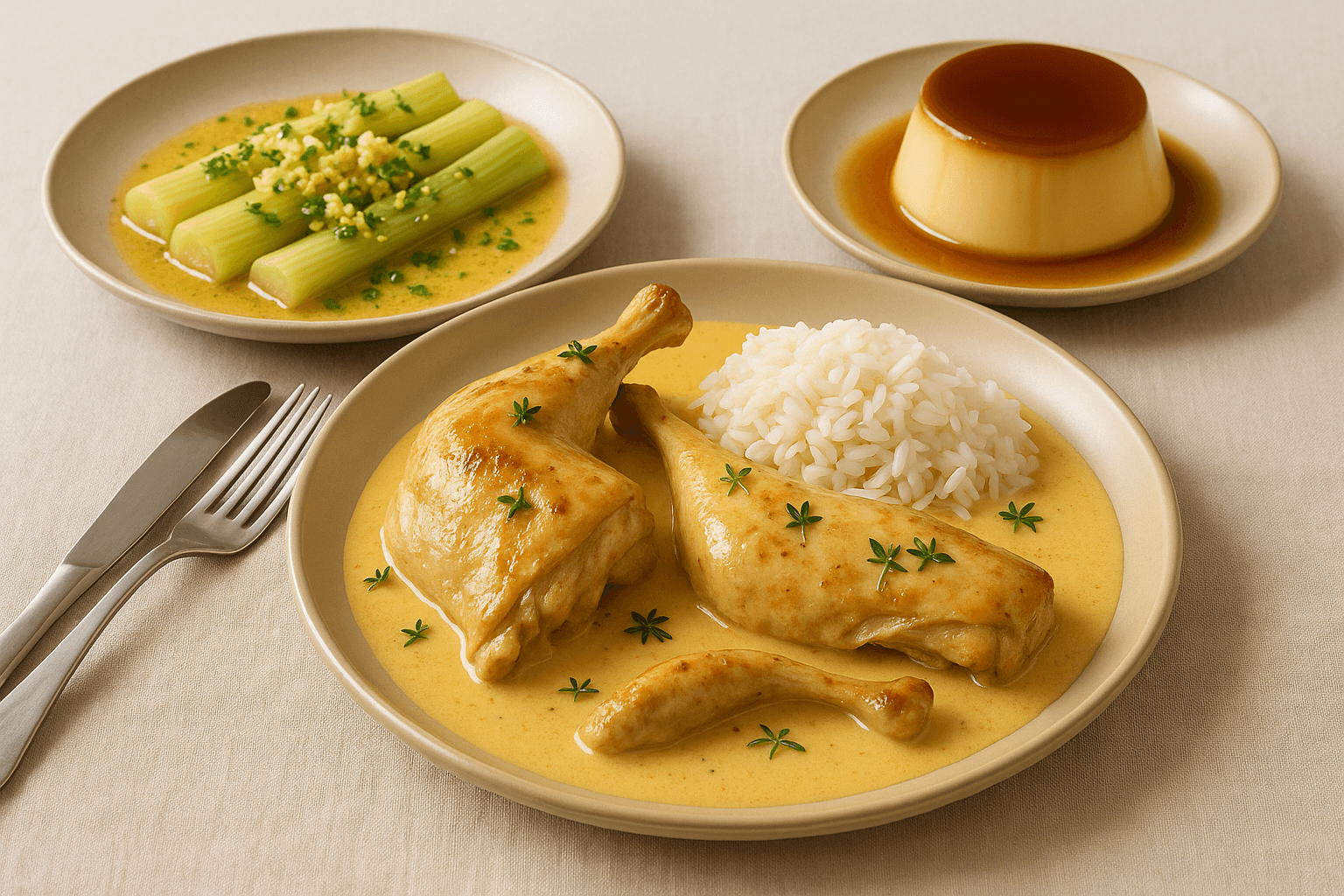 |
Some meals do not ask for attention, but earn it slowly. This three-course menu is built on that idea: dishes shaped by tradition, cooked with patience, and served without excess.
We begin with poireaux vinaigrette, tender leeks dressed simply with mustard and vinegar, a reminder that French cooking often starts with vegetables treated well. The main course, lapin à la moutarde, brings warmth and generosity to the table, rabbit gently braised in a mustard-laced cream sauce, meant to be spooned and savoured rather than admired. To finish, crème caramel offers calm sweetness, its soft custard and bitter caramel closing the meal without weight.
Together, these dishes form a menu that feels coherent and complete. Honest cooking, familiar flavours, and the kind of quiet confidence that needs no explanation. |
Starter |
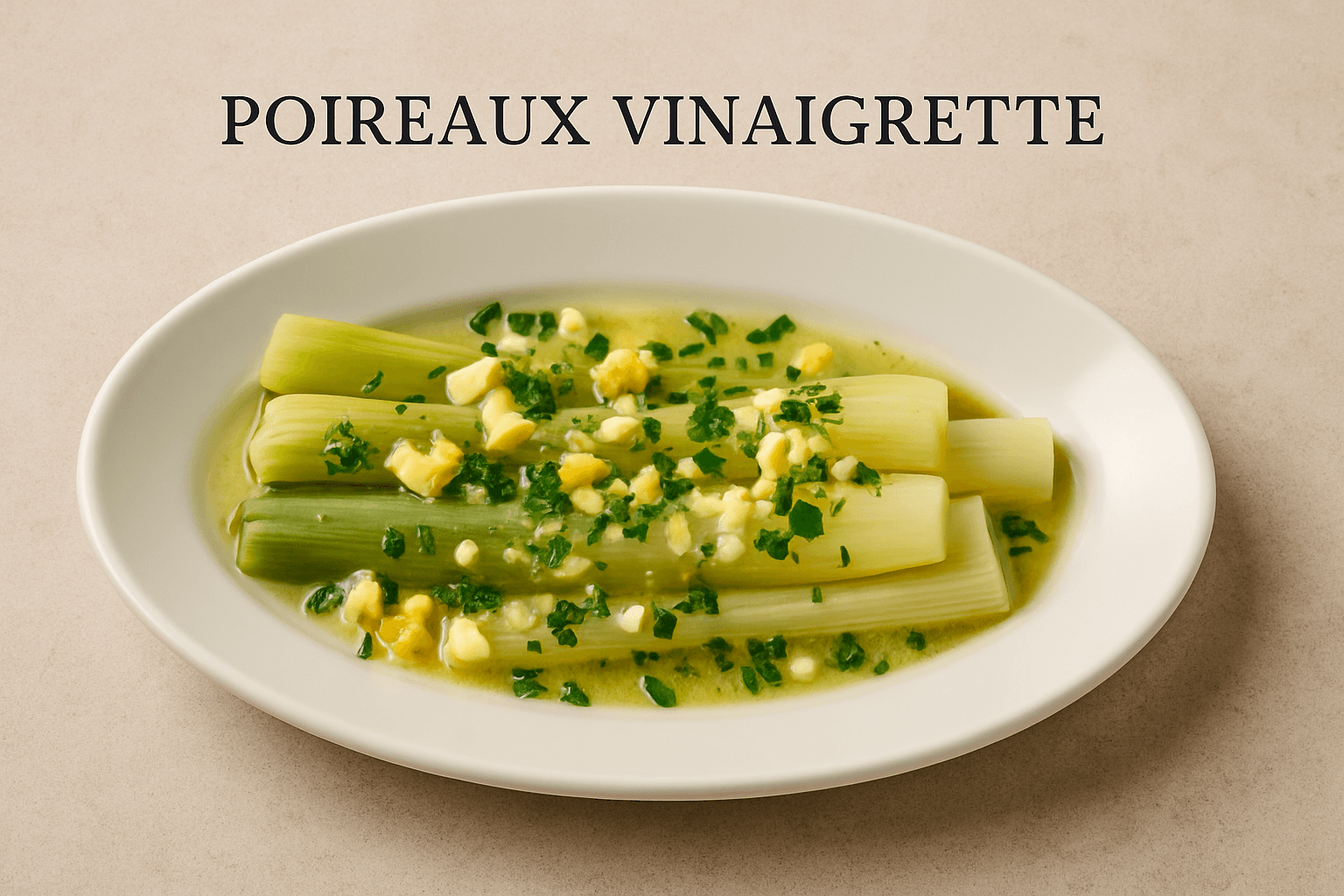 |
Poireaux Vinaigrette
The most honest French starter there is.
There are few dishes that reveal the French kitchen so clearly as poireaux vinaigrette. No butter to hide behind, no cream to soften mistakes. Just leeks, gently cooked until tender, and a vinaigrette sharp enough to wake them up. This is the sort of plate that appears quietly at lunchtime in a Parisian bistro, or at the start of a family meal where nobody feels the need to explain what it is.
Leeks have always been a staple of French home cooking, valued for their sweetness and their ability to carry a simple dressing. In this dish, they are treated with respect. Cooked slowly, drained carefully, and dressed only when they are ready. The vinaigrette is classic: Dijon mustard, red wine vinegar, neutral oil, salt, and pepper. Often, finely chopped shallot is added, and traditionally a little hard-boiled egg scattered over the top.
It is served warm or at room temperature, never cold, and never overloaded. Poireaux vinaigrette is not trying to impress. It is simply correct.
Recipe
Ingredients (serves 4) • 4 large leeks • 1 tbsp Dijon mustard • 2 tbsp red wine vinegar • 6 tbsp neutral oil (sunflower or grapeseed) • Salt and freshly ground black pepper • Optional: 2 hard-boiled eggs, finely chopped • Optional: chopped parsley
Method
Trim the leeks, keeping only the white and pale green parts. Slice lengthwise and wash thoroughly to remove any grit. Tie them loosely and cook gently in salted simmering water for 20–25 minutes until tender. Drain well and allow to cool slightly.
Whisk the mustard with the vinegar, then slowly add the oil until emulsified. Season to taste. Arrange the leeks on a platter, spoon over the vinaigrette, and finish with egg and parsley if using.
Wine Suggestion
Sancerre or Muscadet Sèvre-et-Maine. |
Main Course |
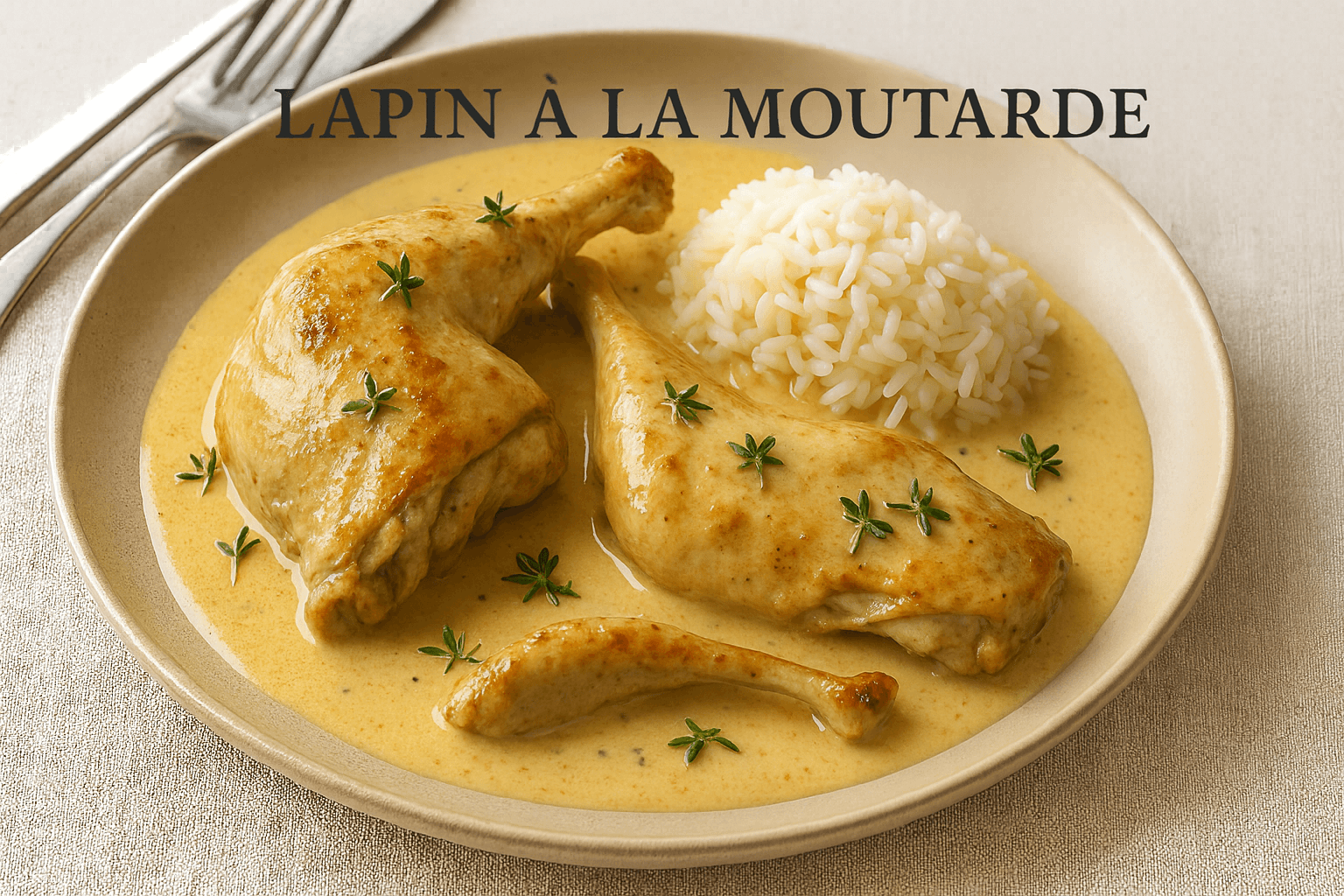 |
Lapin à la Moutarde
A Burgundian classic where mustard leads the way.
Rabbit and mustard belong together in Burgundy. Long before the dish reached restaurant menus, it was cooked at home, slowly, patiently, with ingredients that were always close at hand. Lapin à la moutarde is not a showpiece. It is practical, comforting, and deeply rooted in regional cooking.
The rabbit is browned gently, never rushed, then braised with onions and white wine. Dijon mustard is added generously, not as a sharp accent but as the backbone of the sauce. A little cream softens it at the end, turning the cooking juices into something rich and reassuring without losing the mustard’s character.
This is a dish meant to be served with plain rice or potatoes, nothing more. The sauce does the talking. When made properly, it is quietly luxurious, the kind of meal that fills a kitchen with good smells and a table with silence.
Recipe
Ingredients (serves 4) • 1 rabbit, jointed • 2 tbsp butter • 1 onion, finely sliced • 2 cloves garlic, crushed • 150 ml dry white wine (5 fl oz) • 3 tbsp Dijon mustard • 150 ml crème fraîche (5 fl oz) • Salt and black pepper • Optional: thyme or bay leaf
Method
Season the rabbit pieces lightly. Melt the butter in a heavy casserole and brown the rabbit gently on all sides. Remove and set aside.
In the same pan, soften the onion and garlic without colouring. Deglaze with the white wine, scraping the bottom of the pan. Stir in the mustard and return the rabbit to the casserole. Add herbs if using, cover, and simmer gently for about 45 minutes until tender.
Remove the rabbit, stir the crème fraîche into the sauce, adjust seasoning, then return the rabbit to warm through.
Wine Suggestion
Bourgogne Blanc or a light Chablis. |
Dessert |
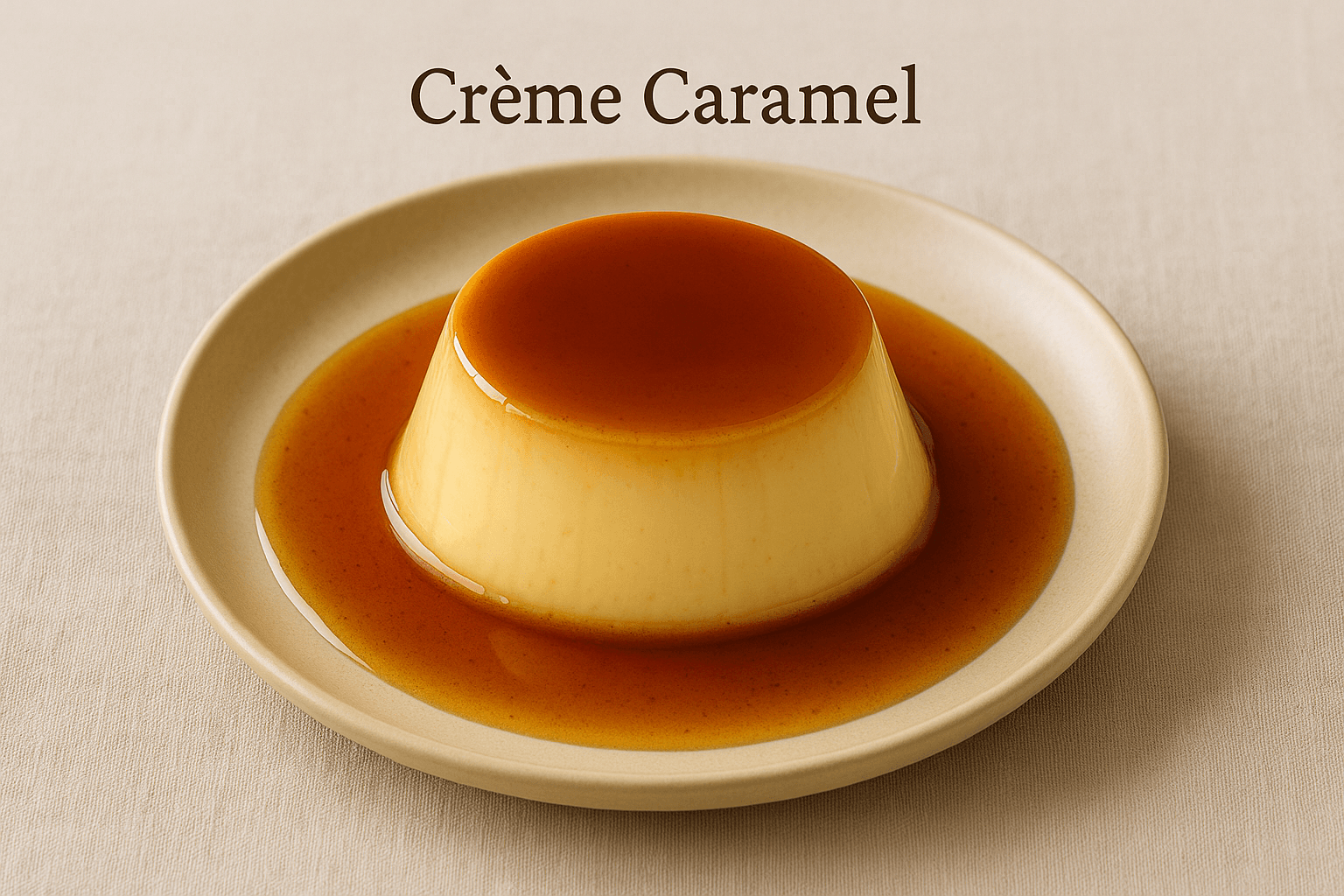 |
Crème Caramel
French dessert at its most restrained.
Crème caramel is one of those desserts that seems simple until you try to make it well. Eggs, milk, sugar, vanilla. Nothing else. And yet it demands precision, patience, and respect for heat. Too hot, and it curdles. Too cool, and it never sets.
Found in homes, bistros, and school canteens alike, crème caramel is deeply woven into French food memory. The caramel is cooked to a deep amber, bitter-sweet rather than sugary. The custard is baked gently in a bain-marie, then left to chill until it unmoulds in one smooth movement, releasing its sauce like a small miracle.
It is not a dessert that shouts. It finishes a meal quietly, confidently, and completely.
Recipe
Ingredients (serves 6) • 150 g sugar (¾ cup) • 500 ml whole milk (2 cups) • 4 large eggs • 1 tsp vanilla extract
Method
Preheat oven to 160°C / 320°F.
Melt the sugar in a saucepan until a deep caramel forms. Immediately pour into a baking dish or individual ramekins, tilting to coat the base.
Heat the milk gently until warm, not boiling. Whisk the eggs with vanilla, then slowly pour in the milk. Strain and pour over the caramel.
Place the dish in a bain-marie and bake for 40–45 minutes until just set. Cool completely, then chill. Unmould just before serving.
Wine Suggestion
A small glass of Sauternes or Monbazillac, or simply espresso. |
Recipe Articles |
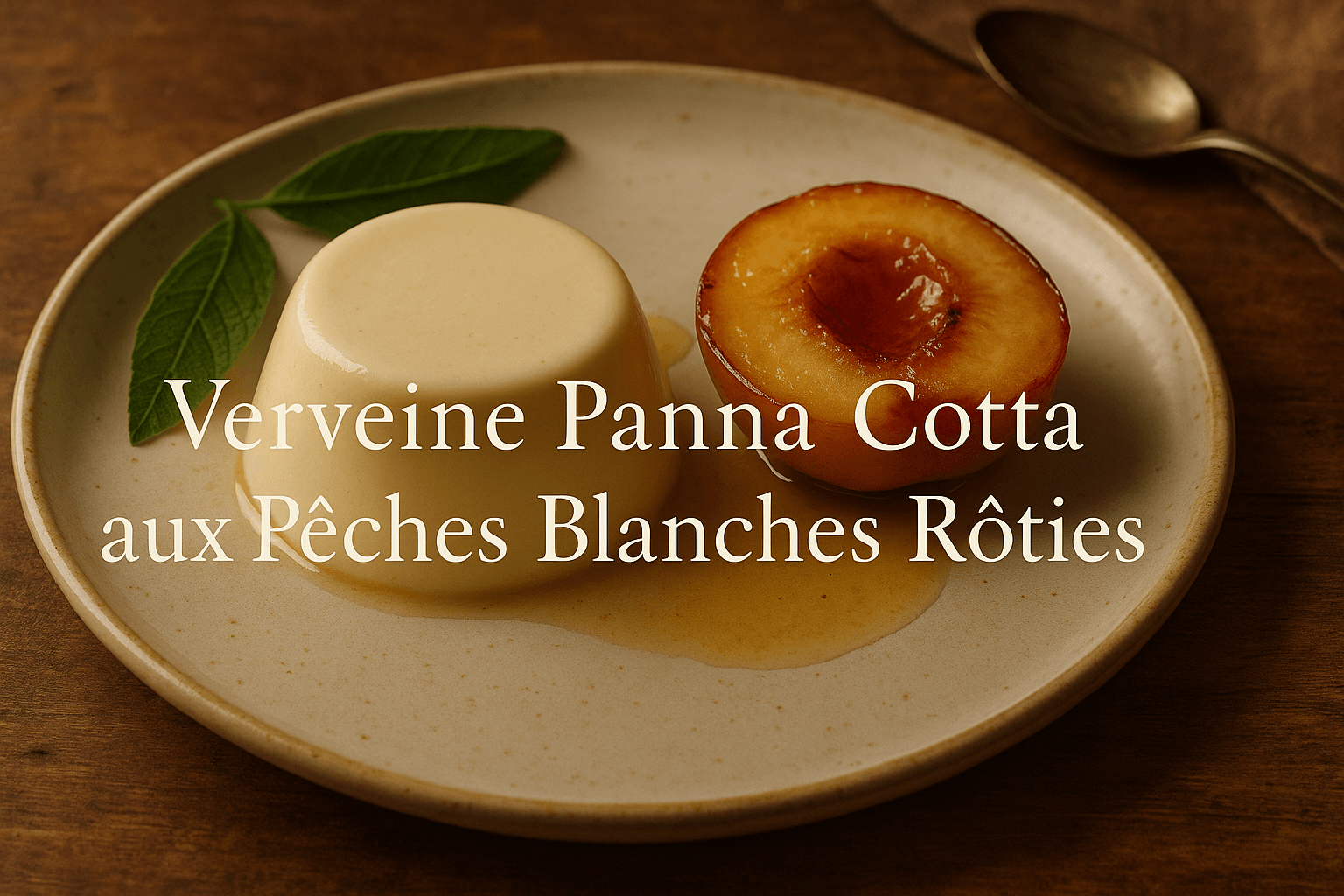 |
The essence of late summer arrives in every cool, trembling spoonful of this lemon verbena-infused panna cotta.
Herb-scented cream, especially with lemon verbena, offers a subtle garden aroma that lingers and soothes the senses.
Paired with roasted white peaches, tender and perfumed after a short roast, the fruit’s natural sweetness intensifies into a dusk-colored syrup.
The dessert is modern yet classic, unpretentious, and intentionally made to delight.
It’s a relaxed ritual—the panna cotta chills as you sip wine, peaches roasting as day turns to evening.
Enjoyed with a glass of Viognier from the Rhône Valley, the dish becomes a final indulgence, filling the room with the soft brightness and quiet luxury of late summer. Read More... |
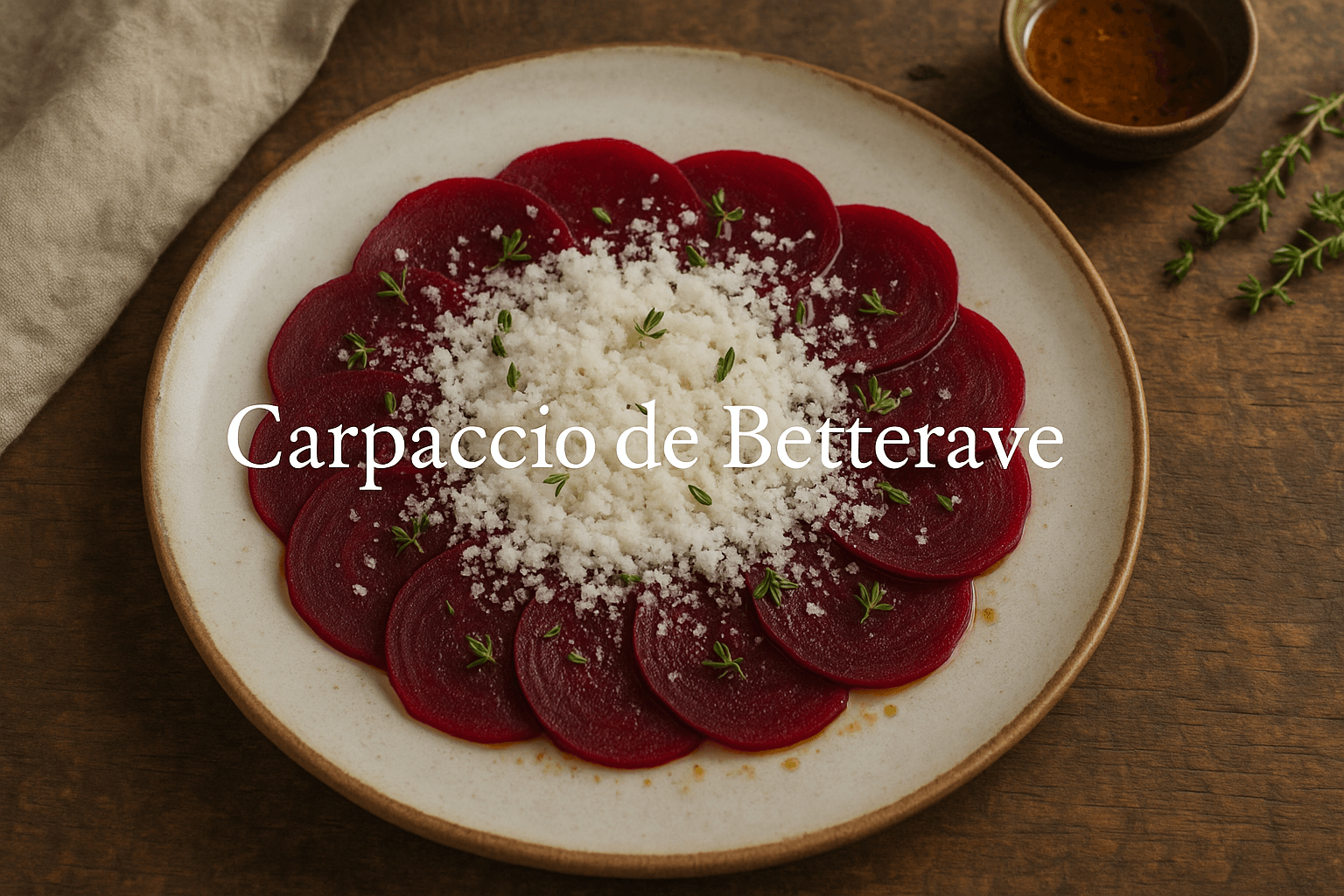 |
Spring arrives at the table in this elegant beetroot carpaccio, where earthiness meets floral notes and every detail whispers of modern French restraint.
Thin slices of ruby beetroot are arranged just so, glowing with the last light of afternoon.
A dusting of goat cheese melts like early snow, while the vinaigrette—a Provençal secret—carries the perfumed lift of lavender honey, lemon, and Dijon.
The recipe is rooted in the countryside, inspired by a beekeeper’s wisdom to warm honey gently, unlocking its summer aromas.
Fragrant thyme and cracked pepper add a herbal drift, turning each bite into a quiet tribute to the fields.
Served as a light yet luxurious appetizer, the dish invites you to slow down and taste the delicate story of the land—especially when paired with a chilled Loire Sancerre Rosé.
Read More... |
 |
 |
And so…
We close this meal as French cooking often does: without flourish, but with quiet satisfaction. Tender leeks, gently dressed. Rabbit braised patiently in mustard and cream. A simple custard, cooled and unmoulded, finished with nothing more than caramel and time.
These are dishes that do not rush to impress. They linger instead, reminding us that good food is often built from restraint, repetition, and care. Each course gives way to the next naturally, until the table feels settled and complete.
If later this evening a trace of mustard, vanilla, or warm milk drifts back into your thoughts, let it stay there for a moment. Some meals are meant to follow us gently into the night.
Until our next table together, may your kitchen remain calm, your cooking honest, and your meals unhurried. Bon appétit |
💡 Answer to Trivia Question: Escargot tongs or snail tongs. |
Follow us on Facebook: www.facebook.com/thefrenchfork |
Mail us today at: |
THIS PUBLICATION SPONSORED BY